Along the Ice Edge - Svalbard to Island
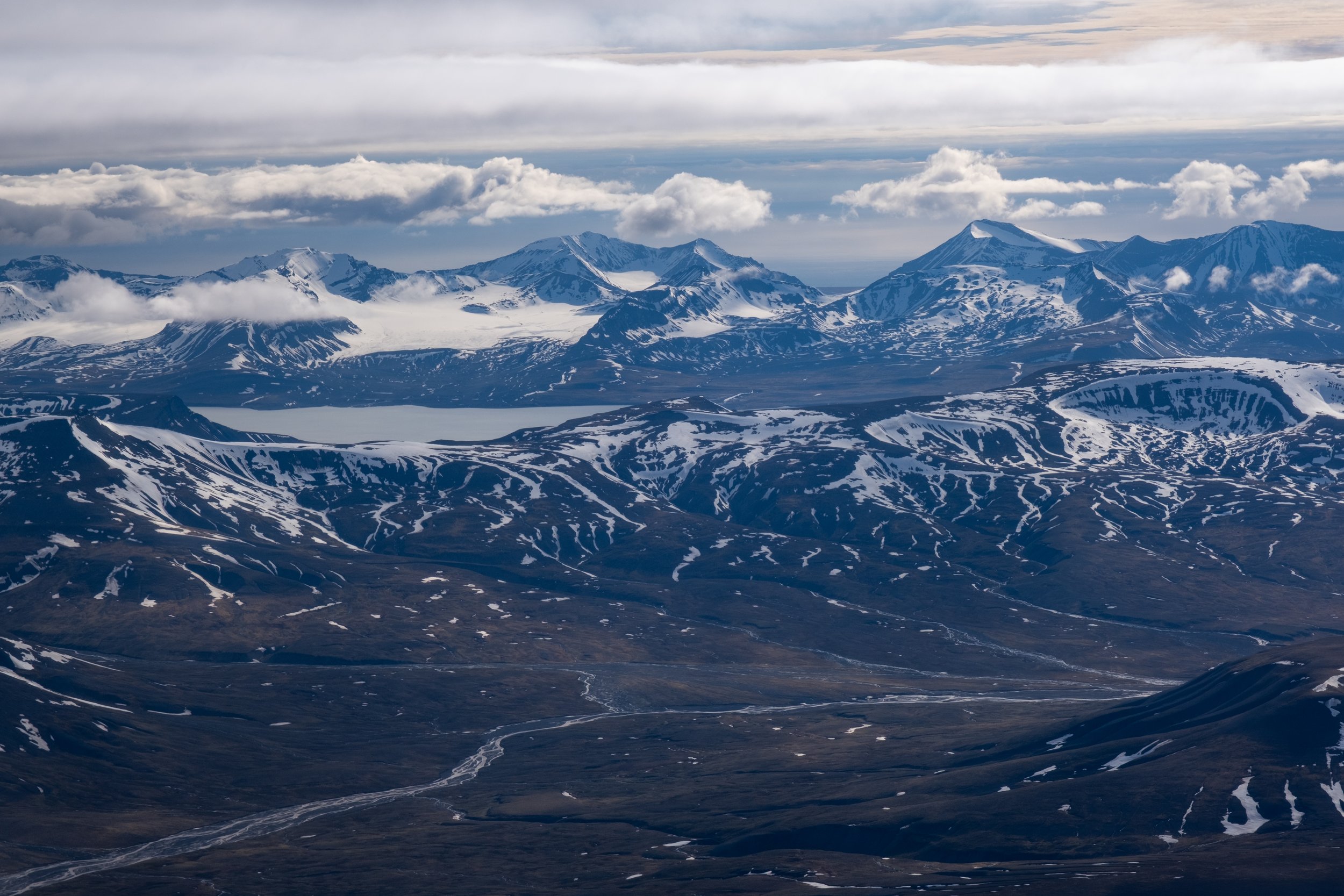
In June, I pack all my winter clothes and fly to Svalbard. 78° north, where the sun doesn’t set all summer. Svalbard offers a beautiful welcome with sunshine, majestic mountains, and impressive glaciers — a view from the airplane window that was easy to get lost in.
I’ve flown to Svalbard to sail with Tilvera Expeditions from Svalbard to Iceland, down along the sea ice edge off Greenland’s east coast — an expedition of more than 1,000 nautical miles.
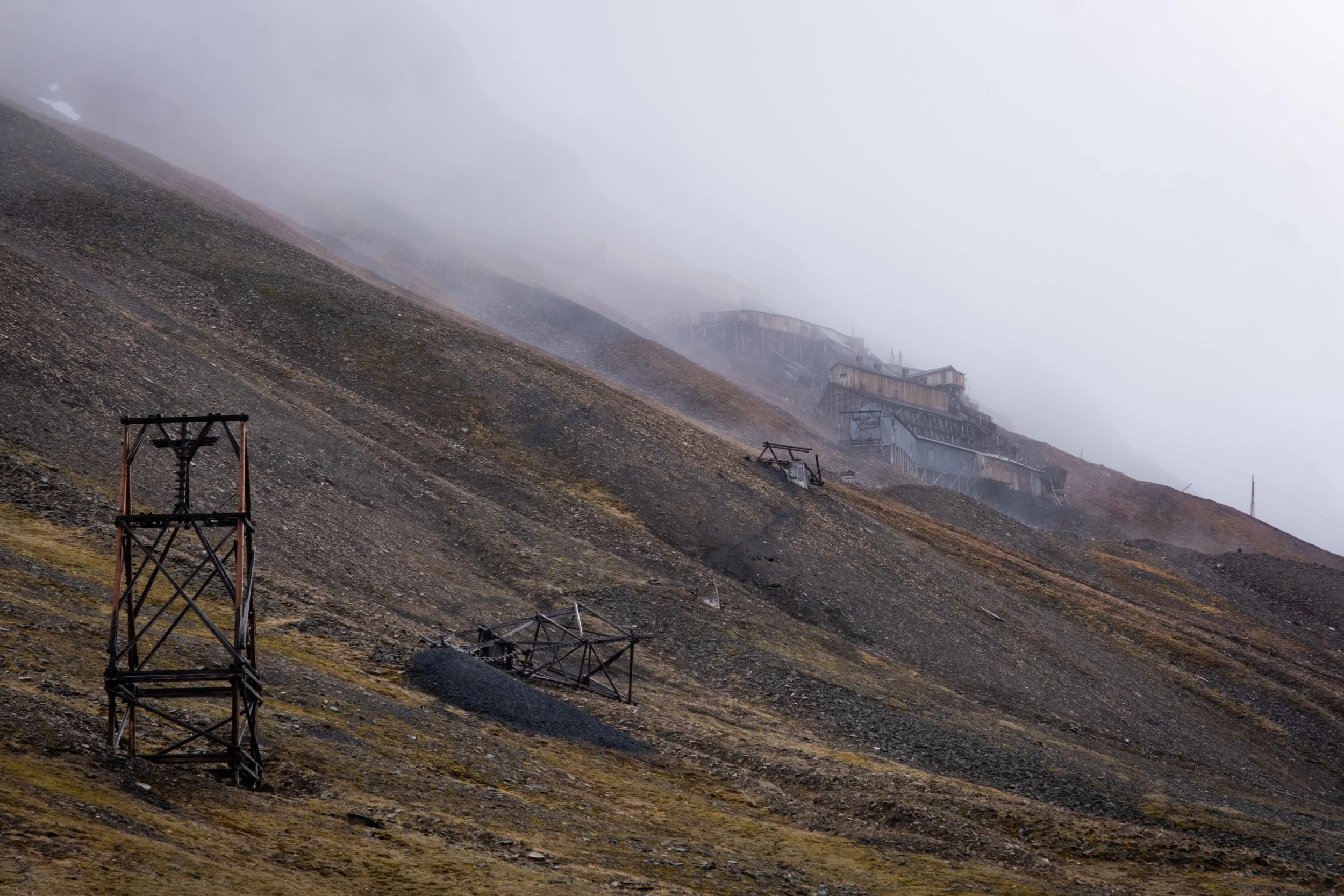
The first two days, before boarding Tilvera, showed a different side to the arctic weather. This far north, even a summer day can bring snowfall. The clouds hung heavy over Longyearbyen with the mountain peaks rarely visible.
I therefore ended up visiting nearly all of Svalbard’s many outdoor shops — and left with a new thick wool sweater. I also visited the Svalbard Museum and the Husky Café.
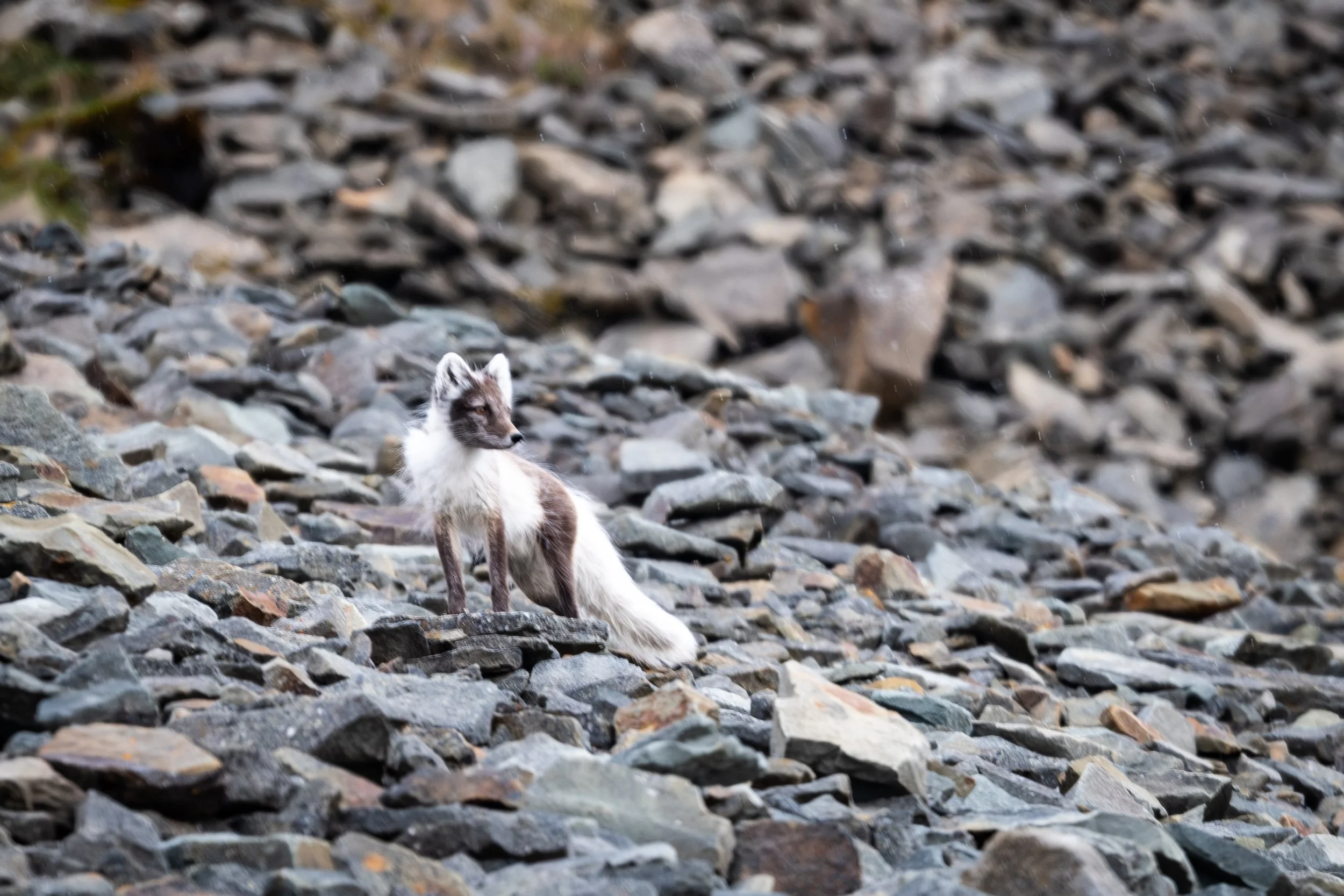
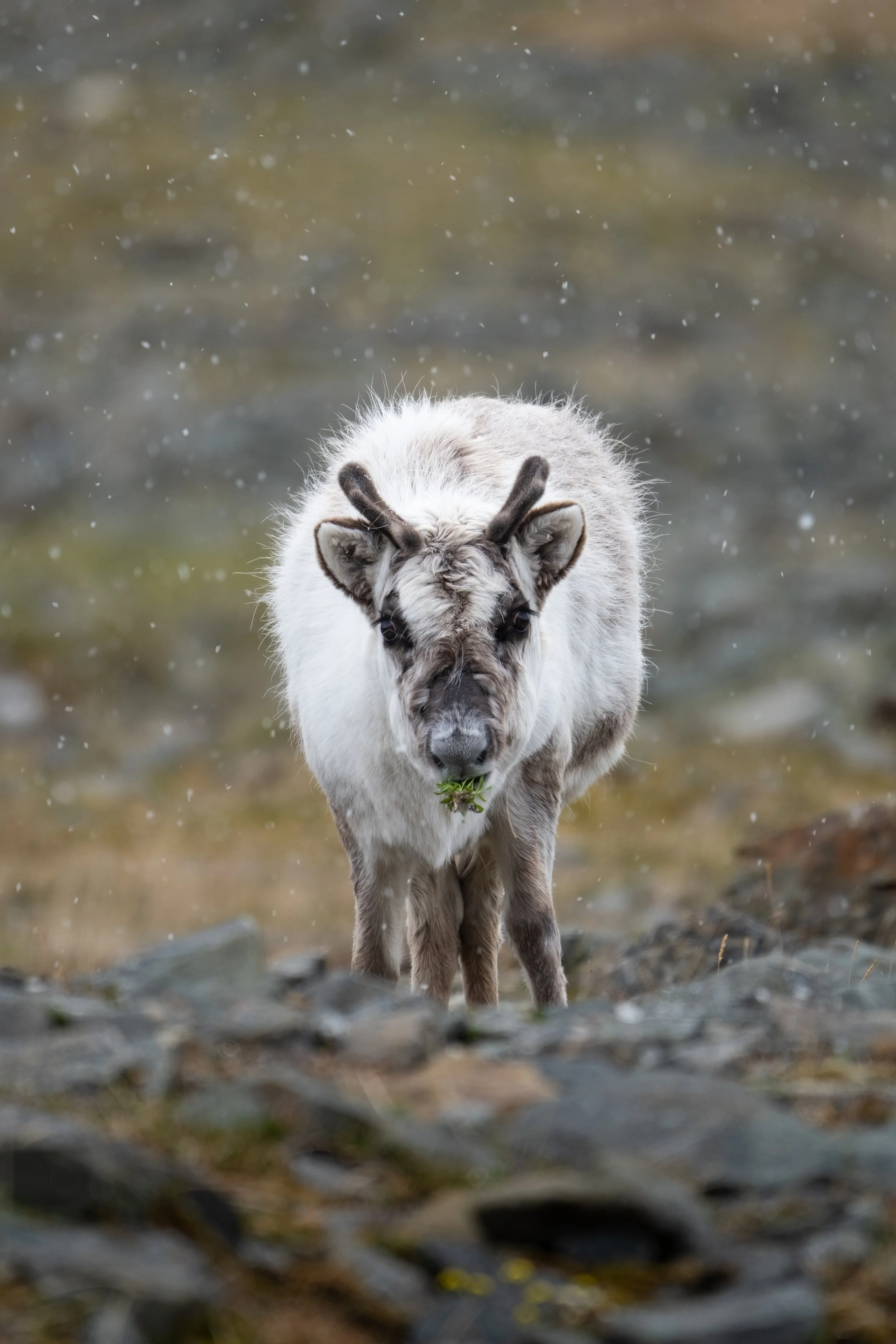
I did manage to get a few outdoor experiences in as well - joining a photography trip to Bjørndalen. Here I was lucky enough to capture both a Svalbard reindeer and an Arctic fox shedding its winter coat.
The first day of the expedition begins as I board Tilvera at noon. An hour later, we set sail and leave Longyearbyen, heading west and out through Isfjorden. After a couple of hours at sea — with distant views of mountains, glaciers, and Barentsburg, the Russian mining town — we turn north and sail between Spitsbergen and Prins Karls Forland.
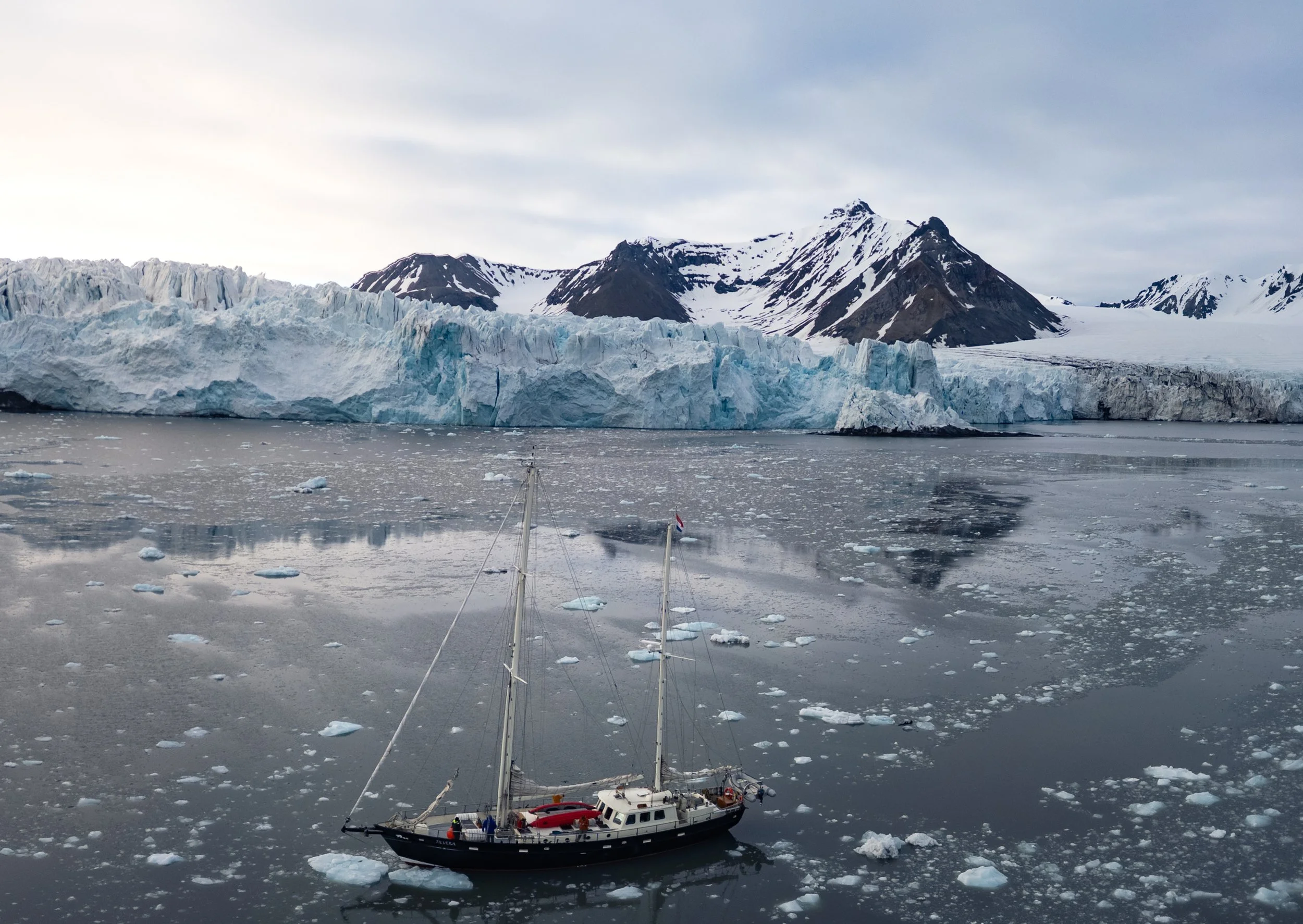
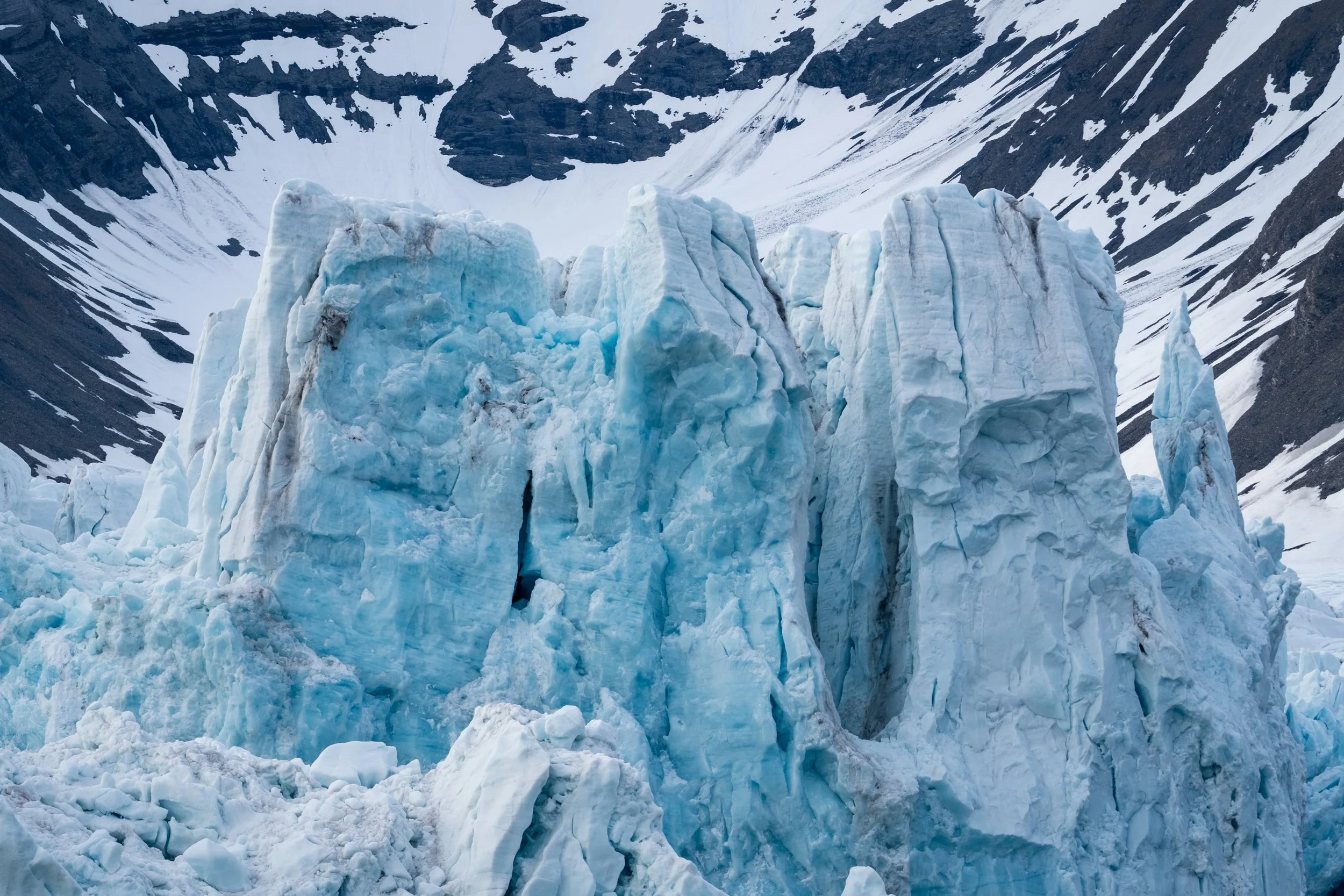
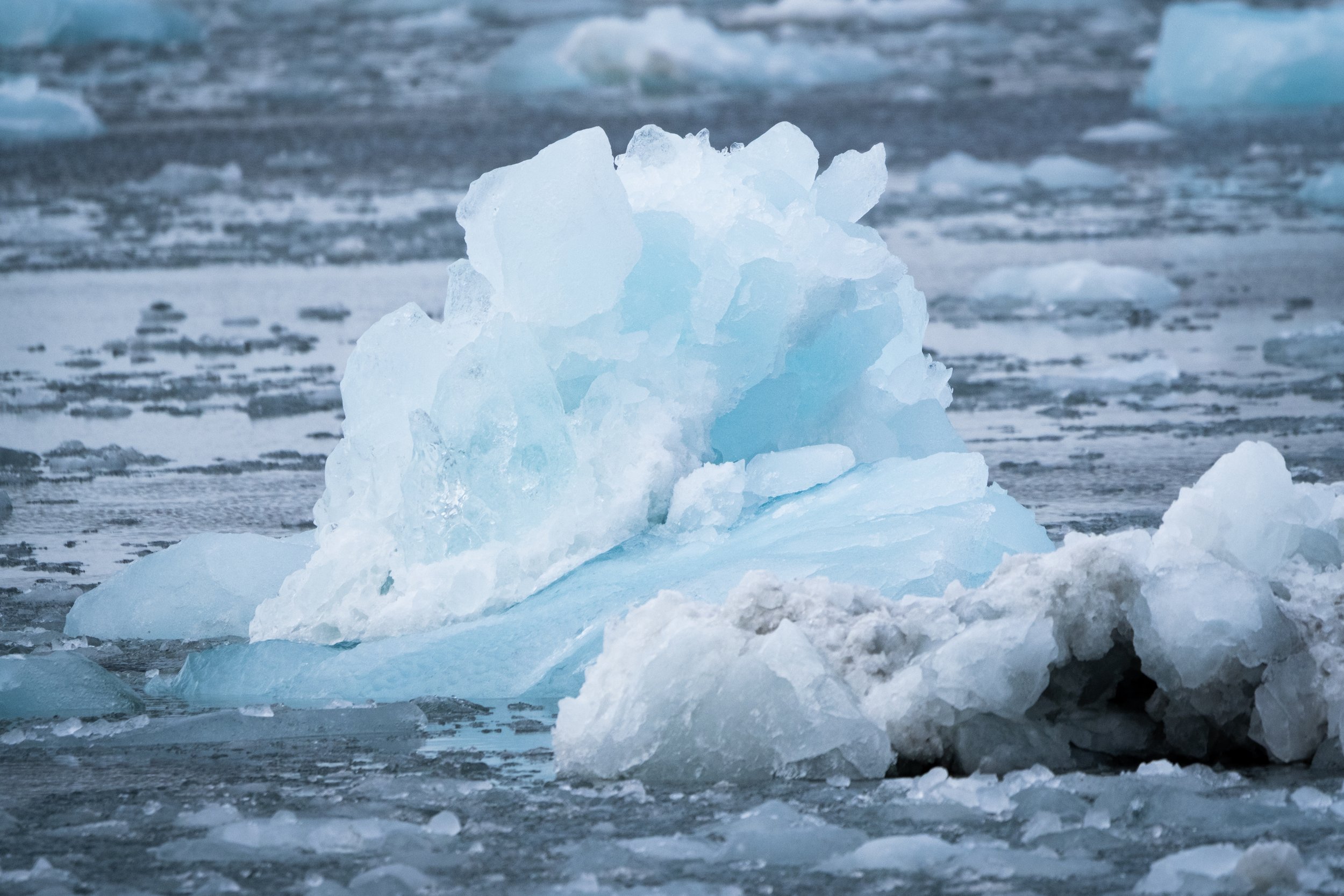
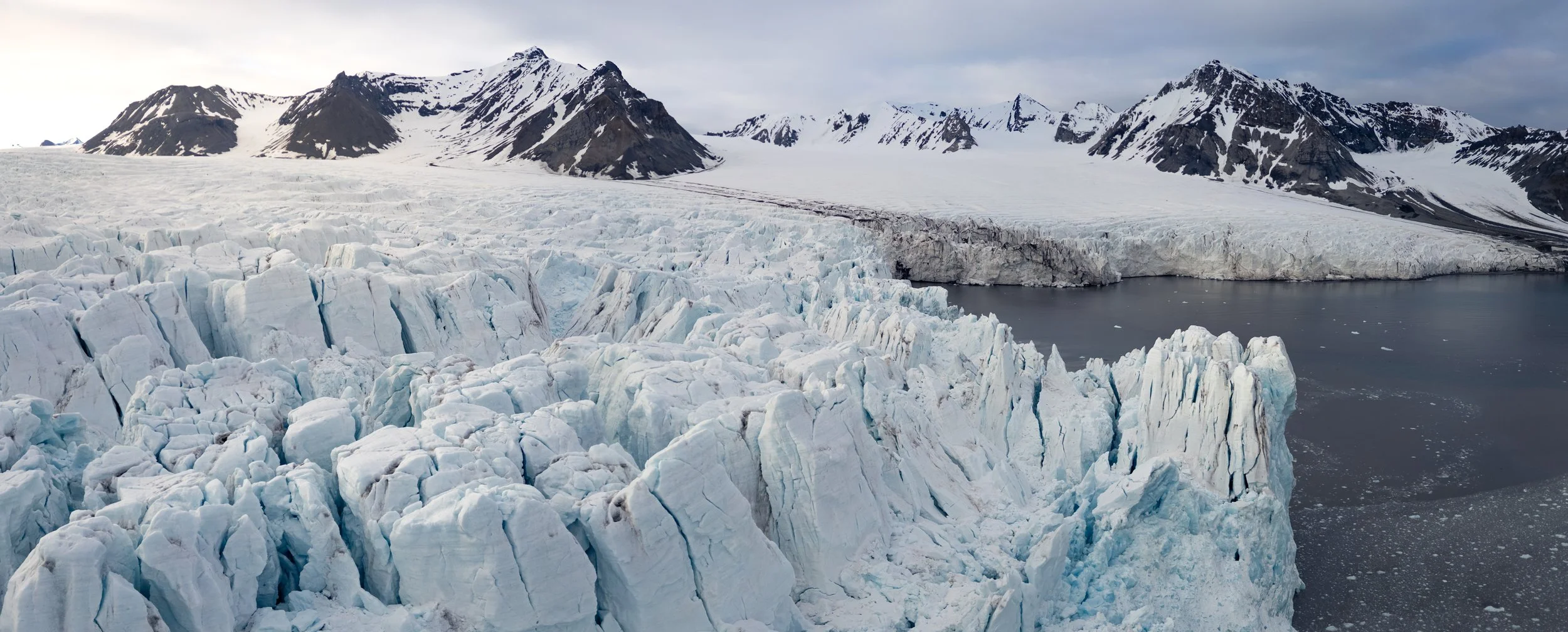
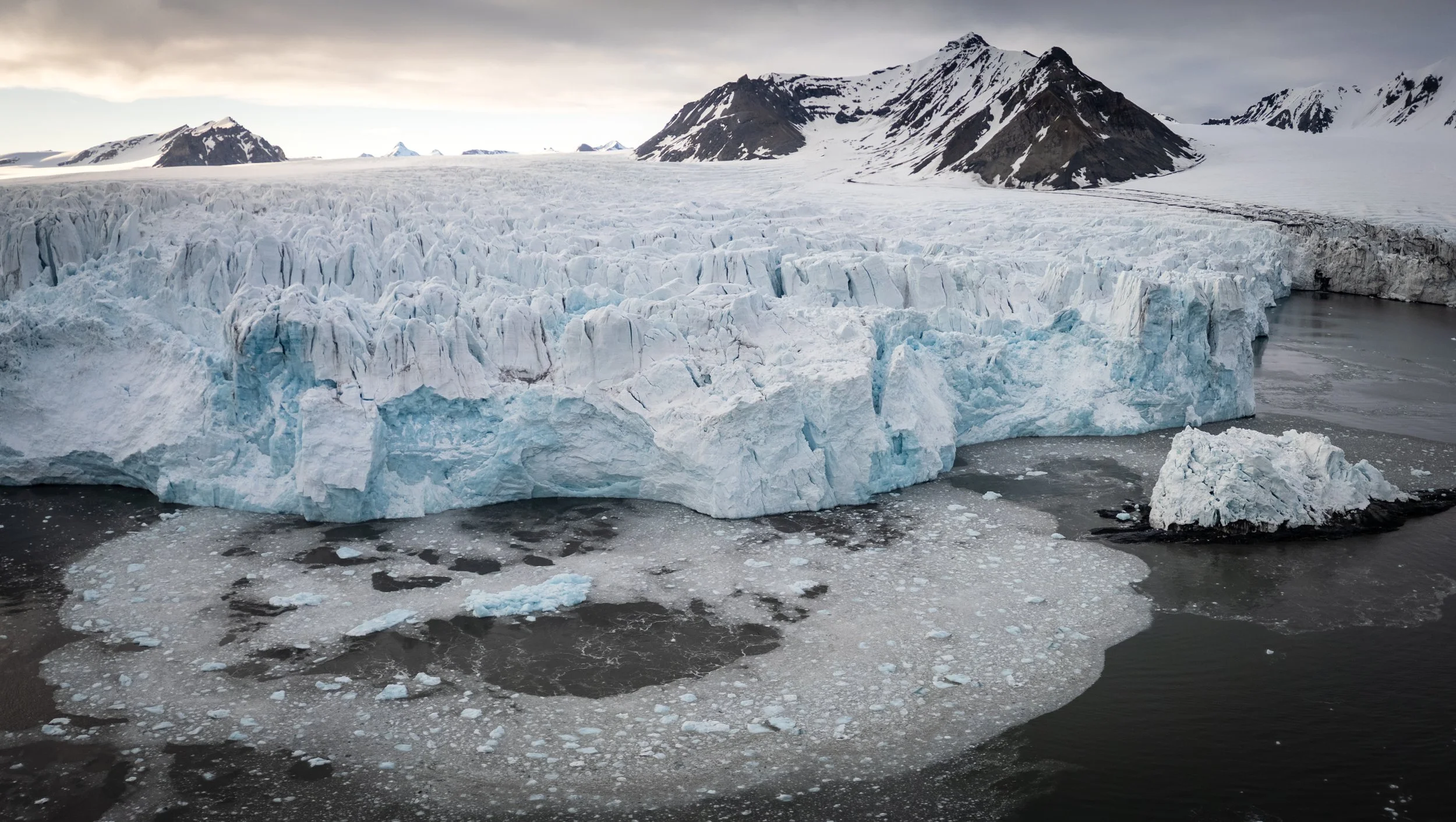
Our first stop is Dahlbreen. The sun is still high in the sky at 11 p.m., and as we approach the glacier, the sea changes into a thick, slushy mix of ice and sediment. We turn off the engine and glide through the brash ice. The soundscape shifts: small chunks of ice tap against Tilvera’s hull, and there is a constant sizzling from air bubbles being released from the melting ice. Every now and then, a loud boom echoes across the fjord as the glacier calves.
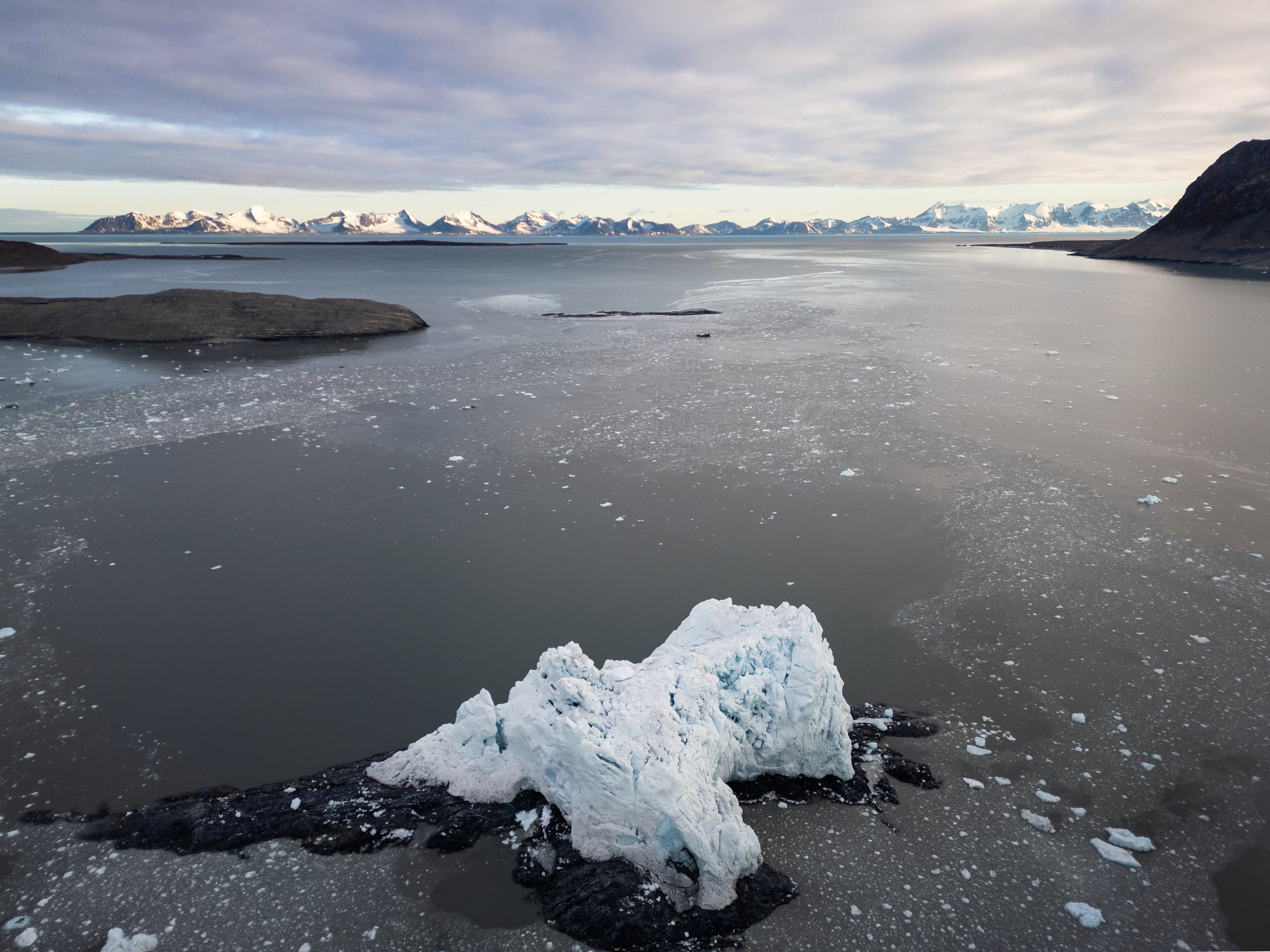
With adrenaline running through my body, I launch the drone from the boat for the first time on the trip. Seeing the landscape from above is breathtaking — and it becomes even clearer just how small both we and Tilvera are.
Being in the middle of this dramatic and magnificent landscape is an extraordinary experience. But it also comes with a sharp awareness that the Arctic is where climate change is felt most intensely. Here, the planet is warming almost four times faster than the global average, causing rapid changes to the landscape and affecting the wildlife that calls the Arctic home.
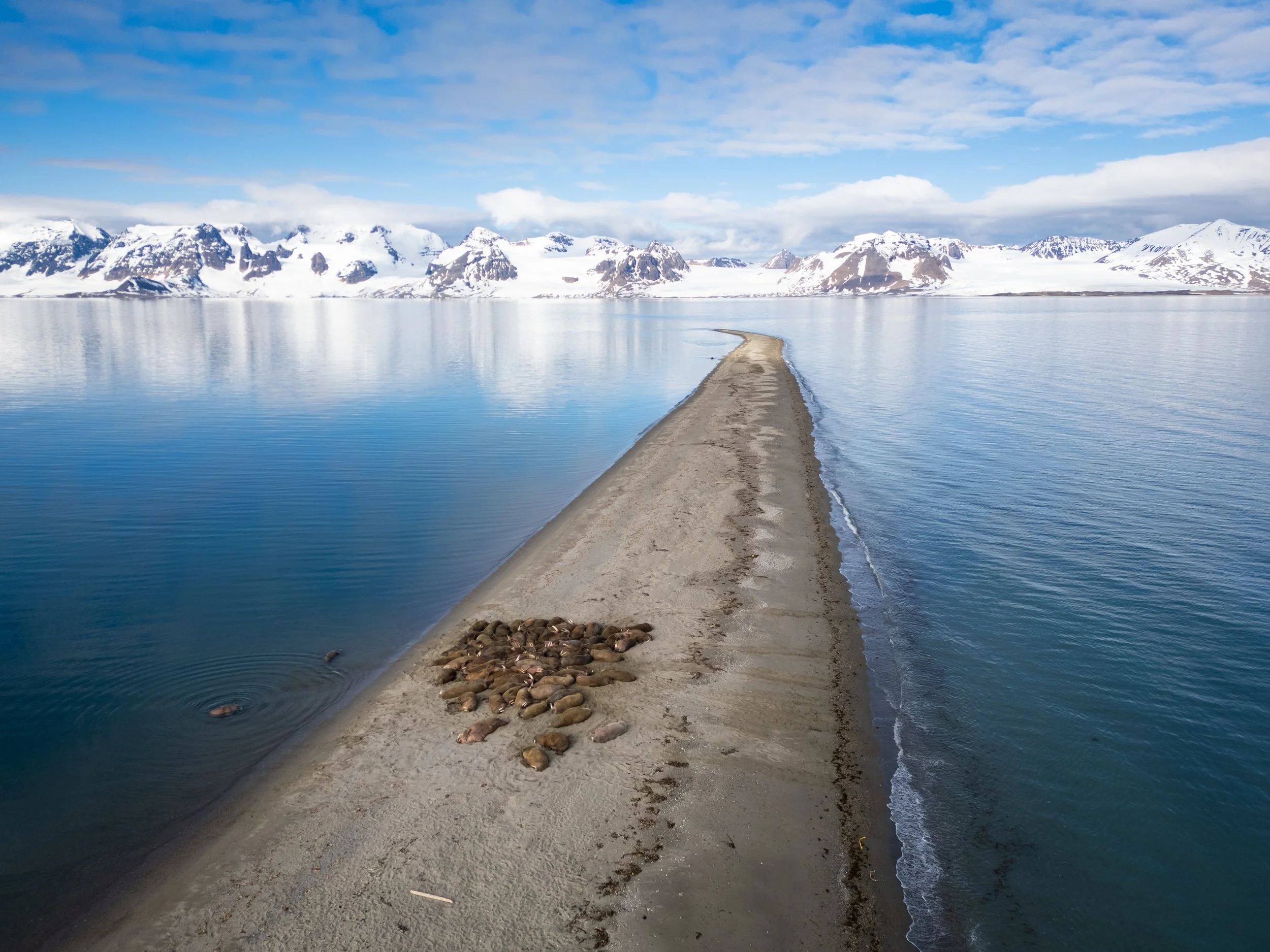
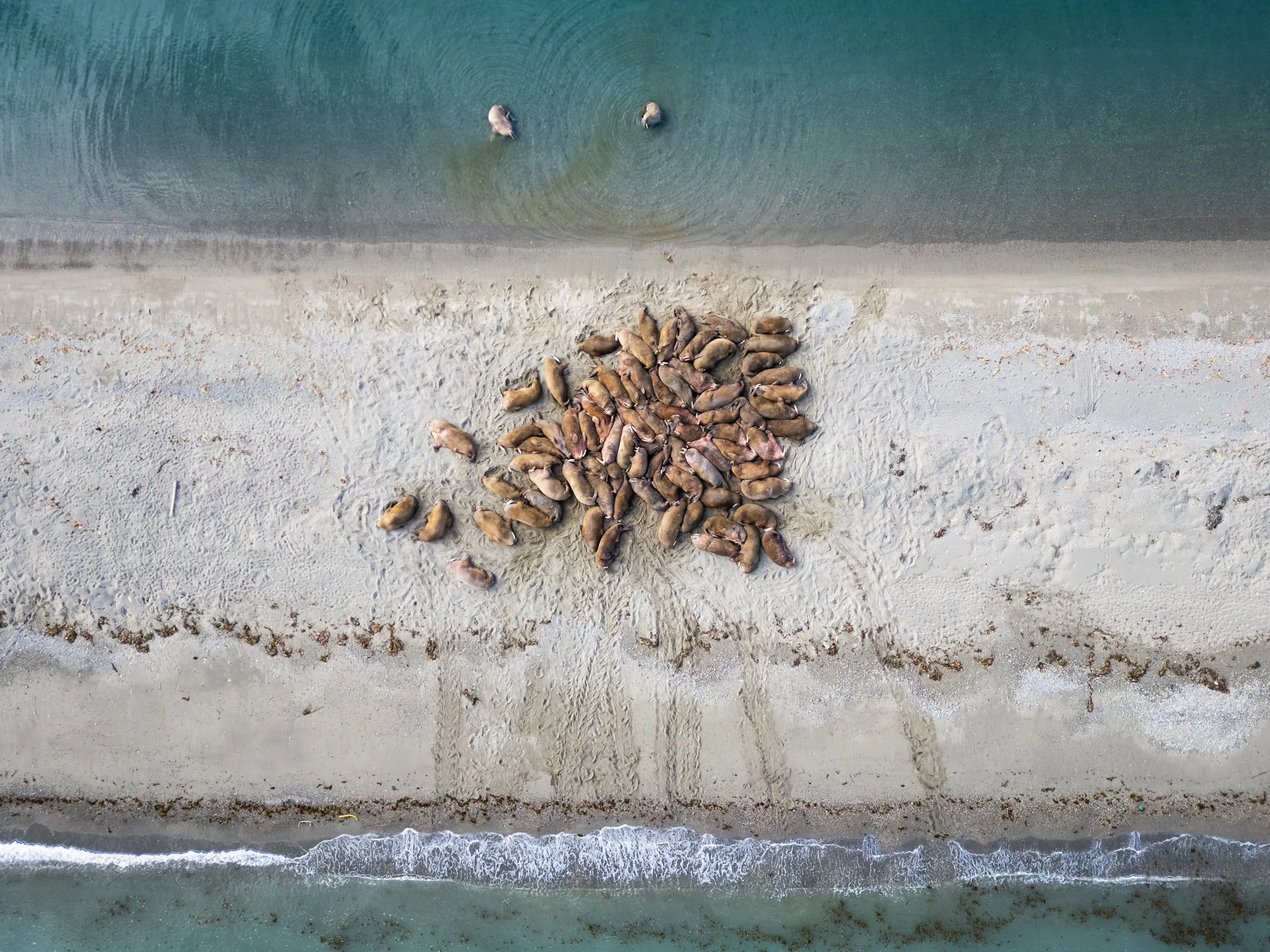
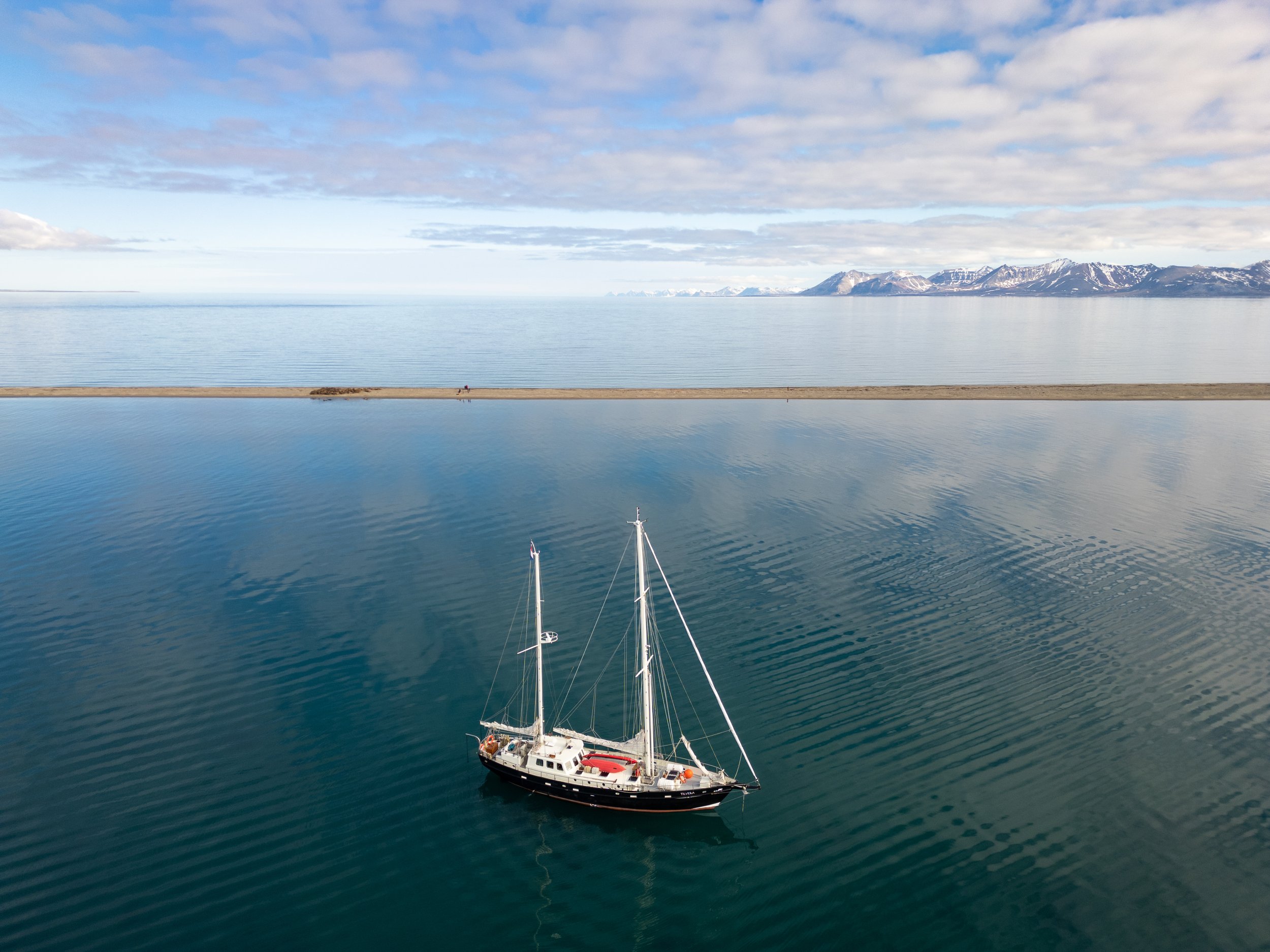
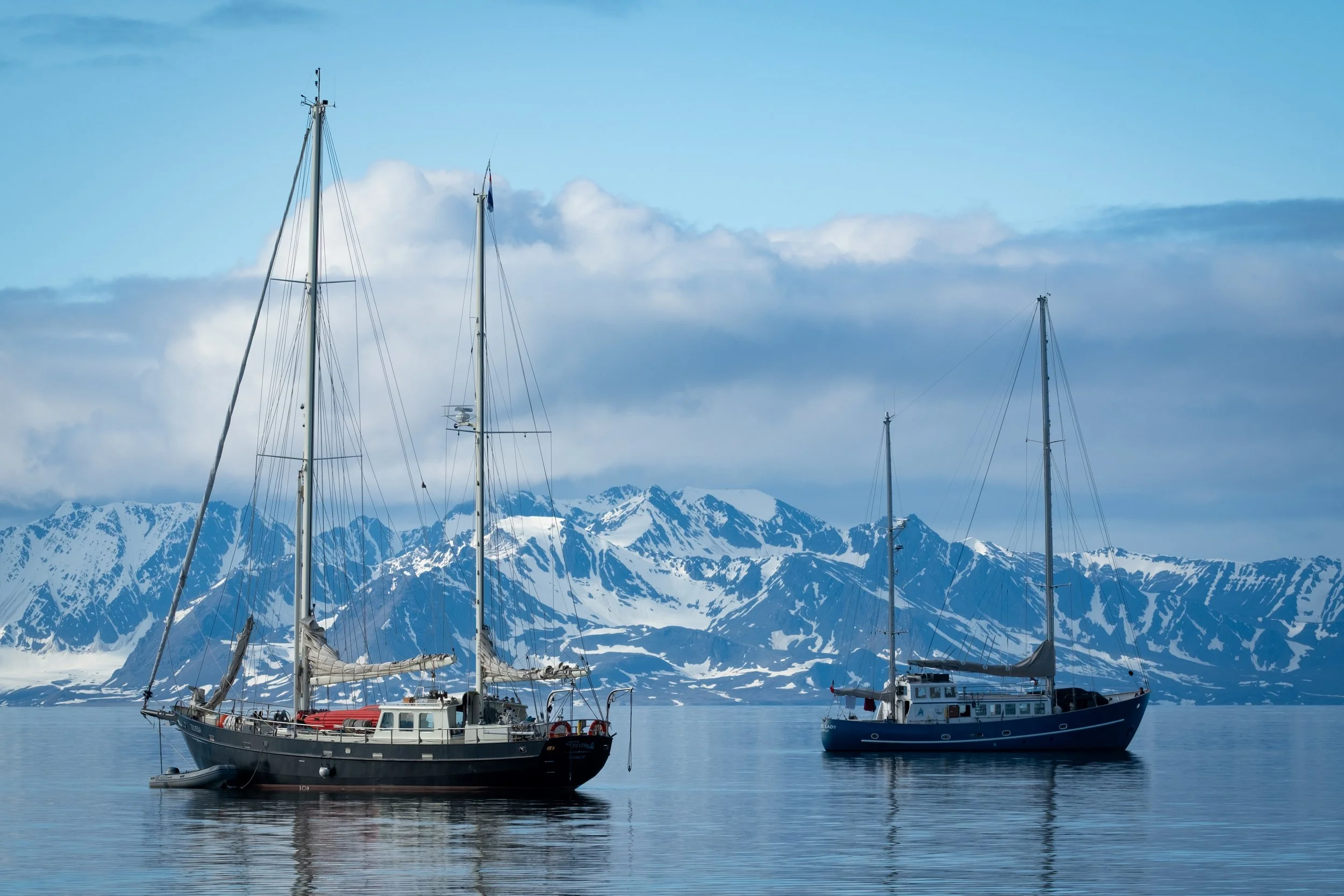
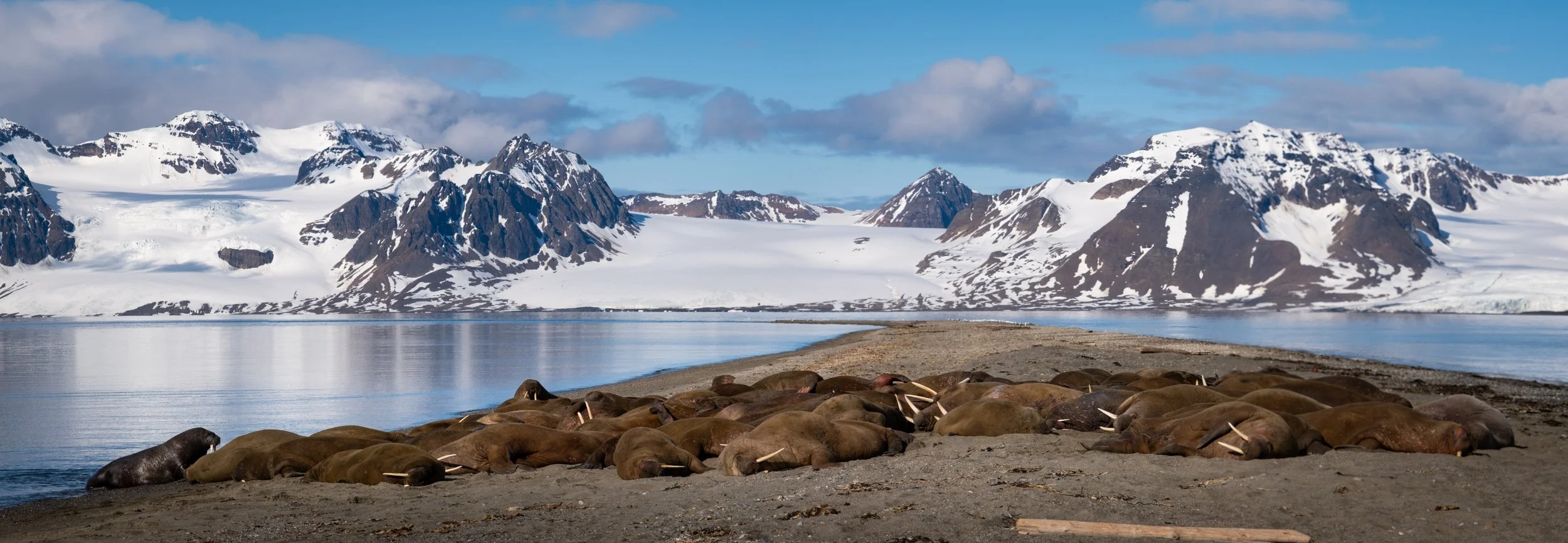
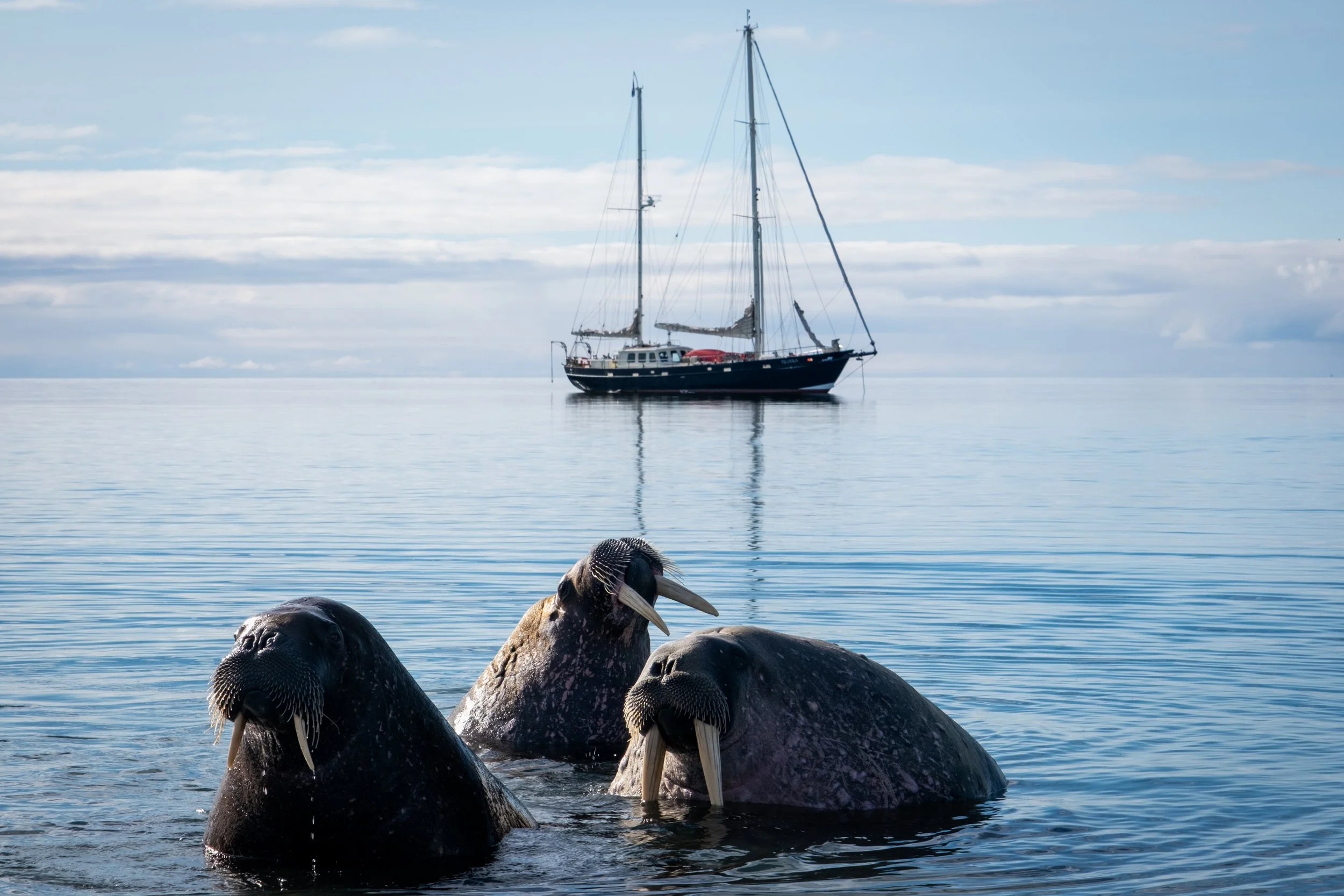
After 5–6 hours of sleep, I wake to find that we’ve anchored beside a long sand spit. The sky is blue, and both mountains and glaciers are mirrored in the perfectly still water. There are two other boats nearby, but we are the first ones up, here at 7 in the morning.
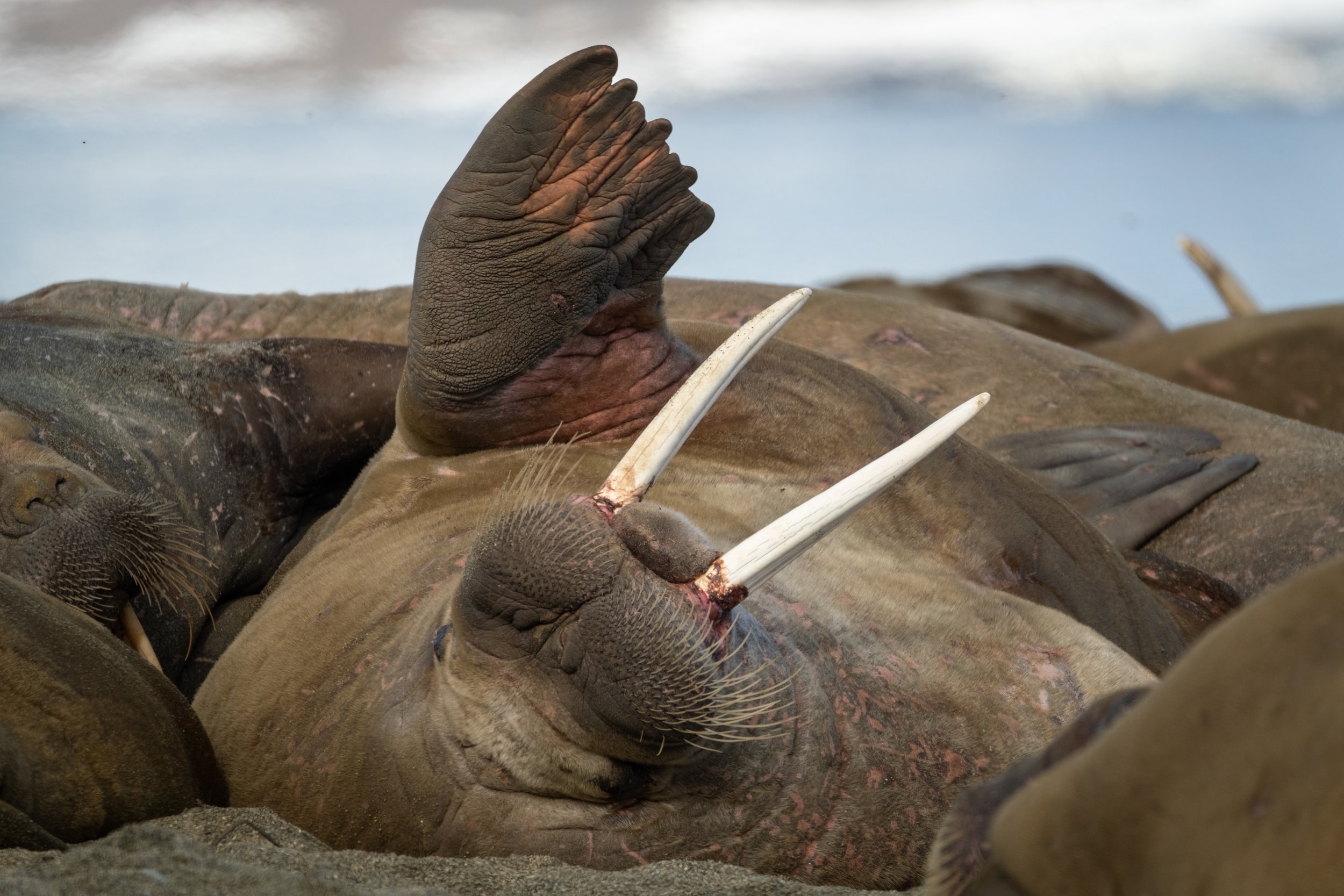
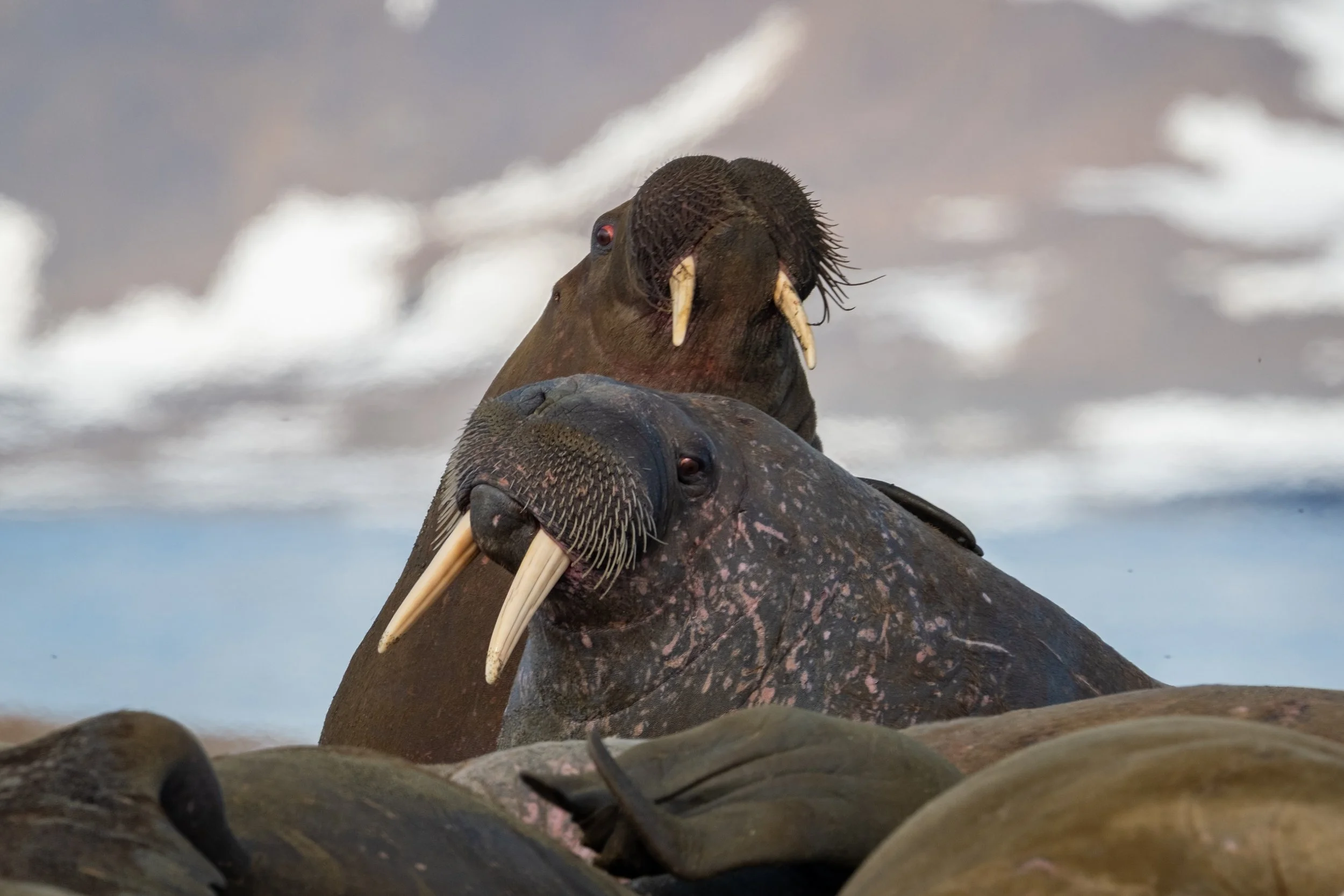
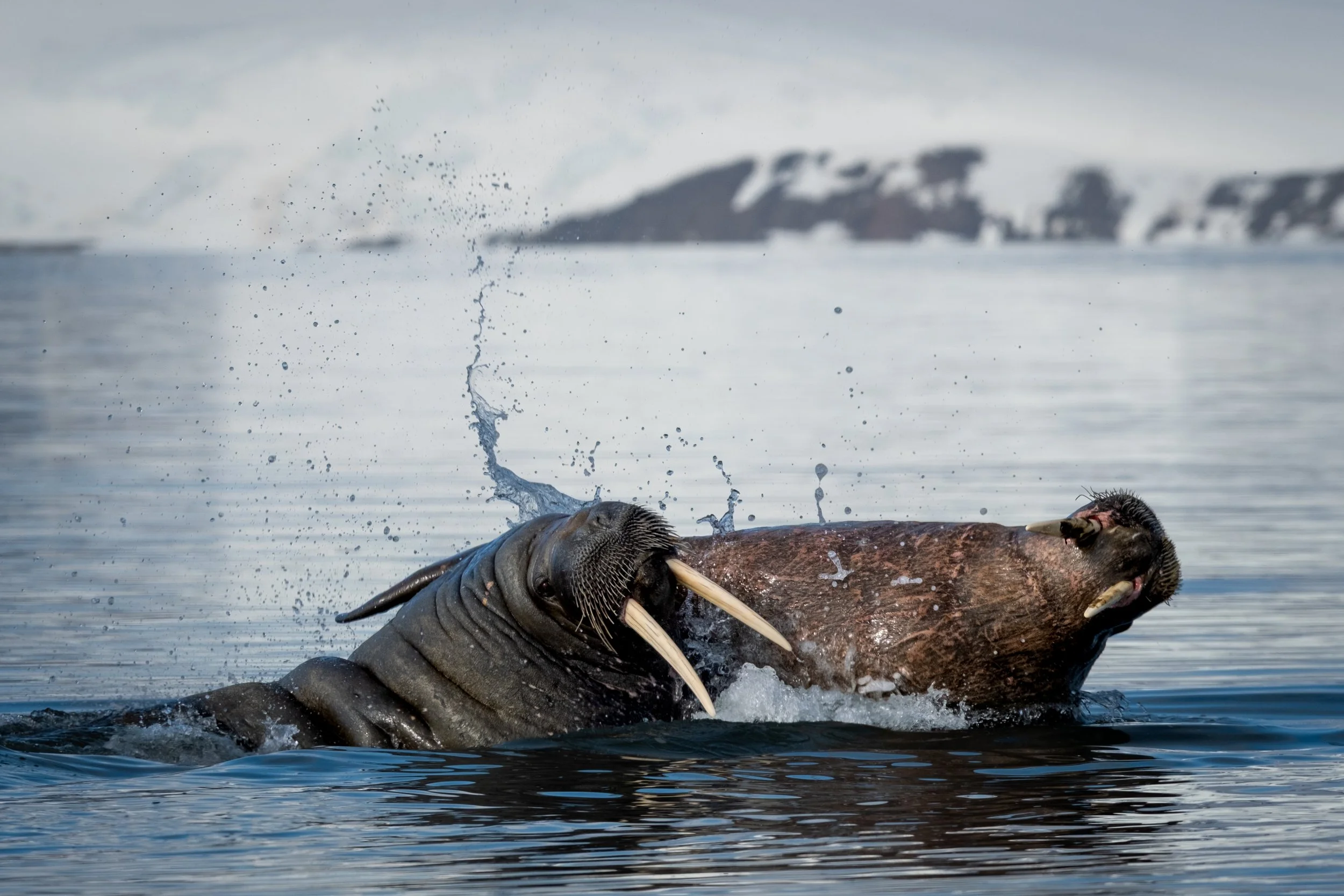
Breakfast will have to wait a little longer, as we take the zodiac over to the sand spit where a colony of walruses is resting. Most of them are lounging in the sun, but a few haul their heavy bodies into the water and swim closer to where we stand, clearly curious.
Back on Tilvera, we continue sailing north. Our next destination is Kongsfjorden and Ny-Ålesund — the world’s northernmost permanent settlement and an international research station for polar science. Everyone is excited to get ashore for a bit and explore the town, especially the small shop filled with souvenirs and plenty of warm wool clothing, which has been talked about with great enthusiasm.
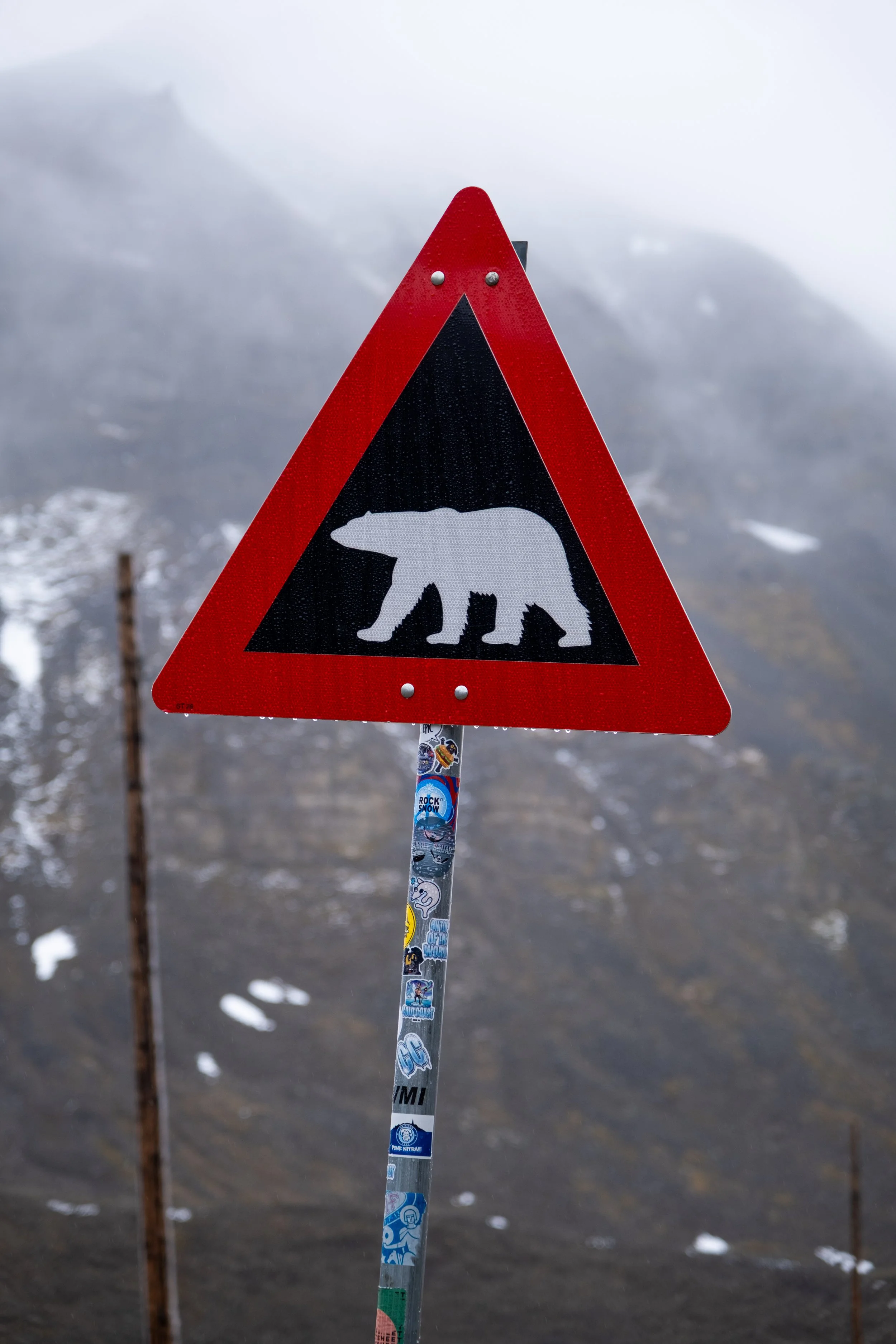
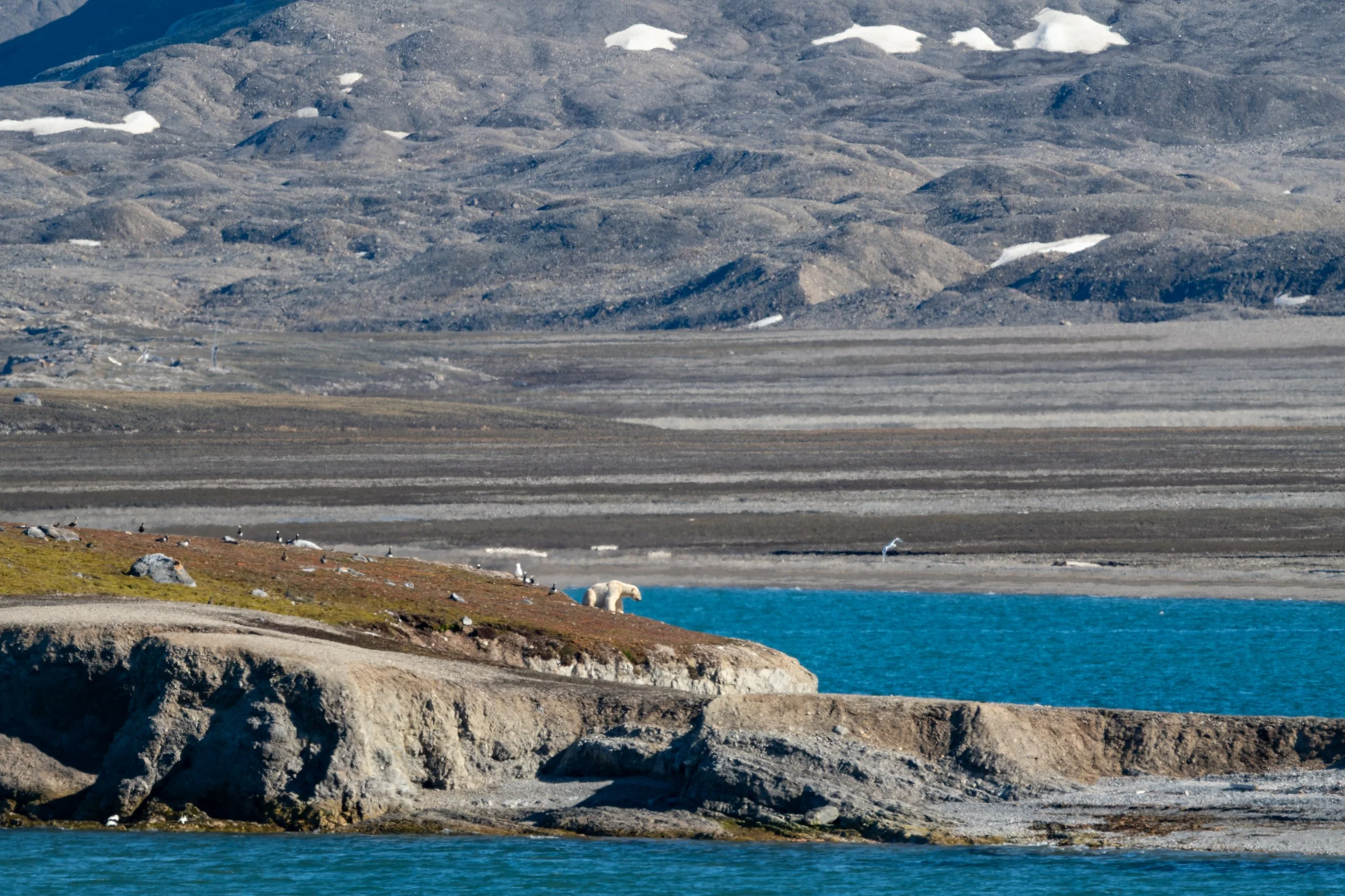
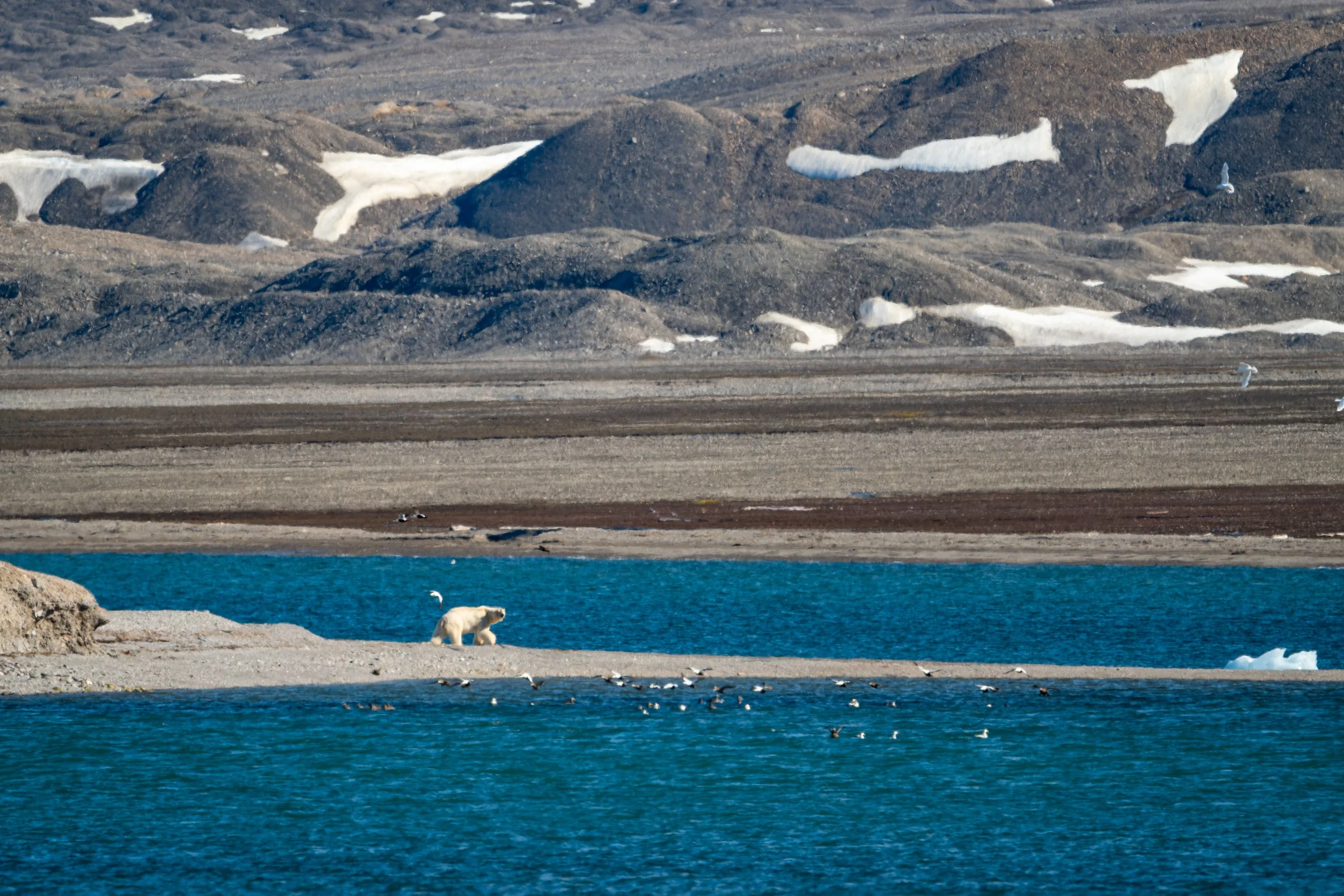
As we walk into Ny Ålesund, I notice a couple of people standing at the end of a row of houses, looking through binoculars across the water. I assume they’re watching the reindeer grazing nearby. But when I reach them, they tell me there’s a polar bear out in the fjord, swimming toward a small island.
I hurry to find the others from Tilvera in the shop and tell them there’s a polar bear nearby. It takes a few repetitions before they truly believe it. Then one of the others and I sprint back to the boat to grab the large telephoto lens for the camera. After a long run, out of breath, we find a spot with a clear view of the small island, where we can see the polar bear wandering around. After a while, it moves out along a narrow sand spit and swims back toward the town, where it is eventually scared off.
Back on Tilvera, everyone is buzzing from the experience. We have dinner and then sail out of Kongsfjorden — heading due west, toward Greenland and the sea ice. Now the watch system begins: four hours on, eight hours off. I’m assigned the 4–8 shift, so I go to bed right after dinner, as I’ll be up early the next morning.
My alarm wakes me up at 03:50. I throw on all my warm clothes and head up to the wheelhouse. The weather is overcast but calm. Astern, we can still make out Svalbard on the horizon.
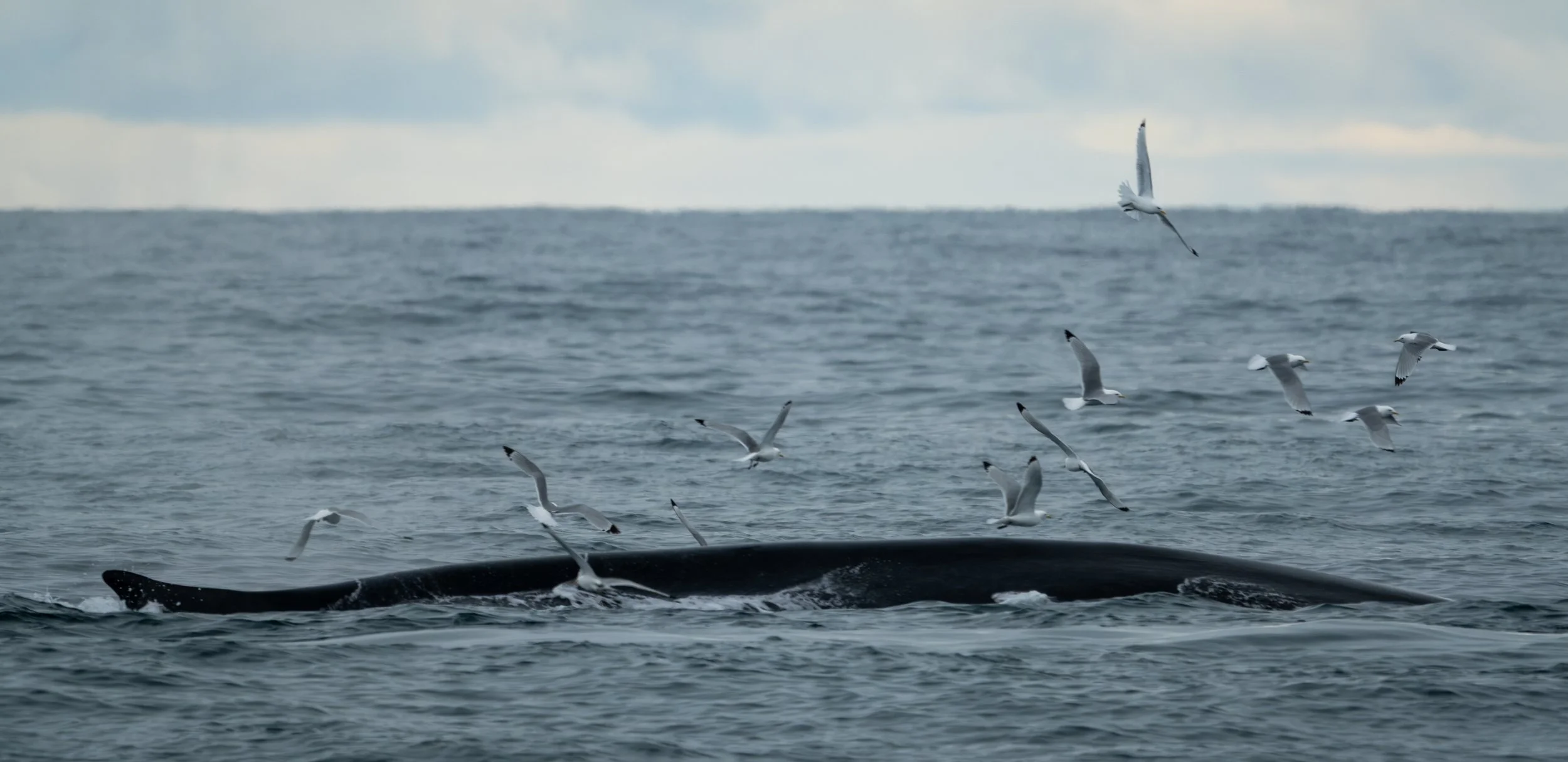
We take turns steering the boat, practicing how to hold a steady course. Several times throughout the day we spot fin whales — the second-largest animal on Earth, surpassed only by the blue whale. Often the first sign is a flock of birds circling over the same patch of water, followed by a tall vertical blow rising into the air. Then we see a dark back and dorsal fin breaking the surface.
During one of our encounters, the boat is surrounded by five or six fin whales, swimming curiously alongside us, incredibly close — wild!
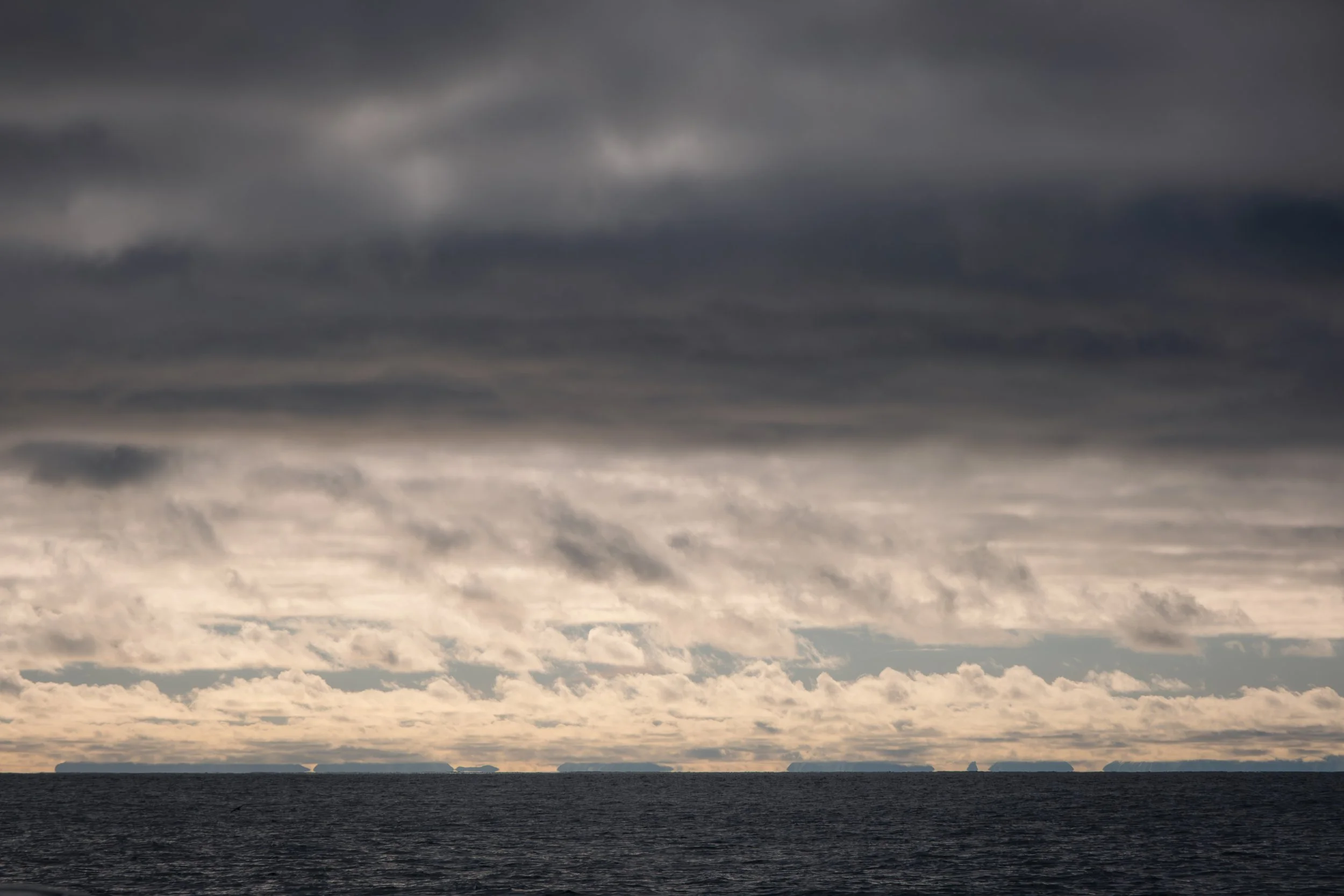
The next many days at sea begin to blend together. Time moves slowly, and what separates one day from the next is mostly the weather. Some days are simply about getting through, and the thought “what on earth have I gotten myself into” appears now and then. The wind howls and the waves are high. Getting dressed in the morning becomes an acrobatic exercise — I’m thrown back and forth between the bunk and the wall while the door swings open and shut nonstop. The only thing that helps is standing up in the wheelhouse with my eyes fixed on the horizon, or lying in my cabin trying to sleep while gravity lets go of me at regular intervals.
Other days are completely calm. A thick fog settles over the ocean, and it feels as if we’re sailing inside a snowglobe, with visibility down to 25–50 meters. It’s a strange feeling to be navigating right along the edge of the sea ice, far out on the Arctic Ocean — and when we check the AIS system, it’s clear that we are absolutely alone on this route. Hundreds of nautical miles separate us from the nearest vessel.
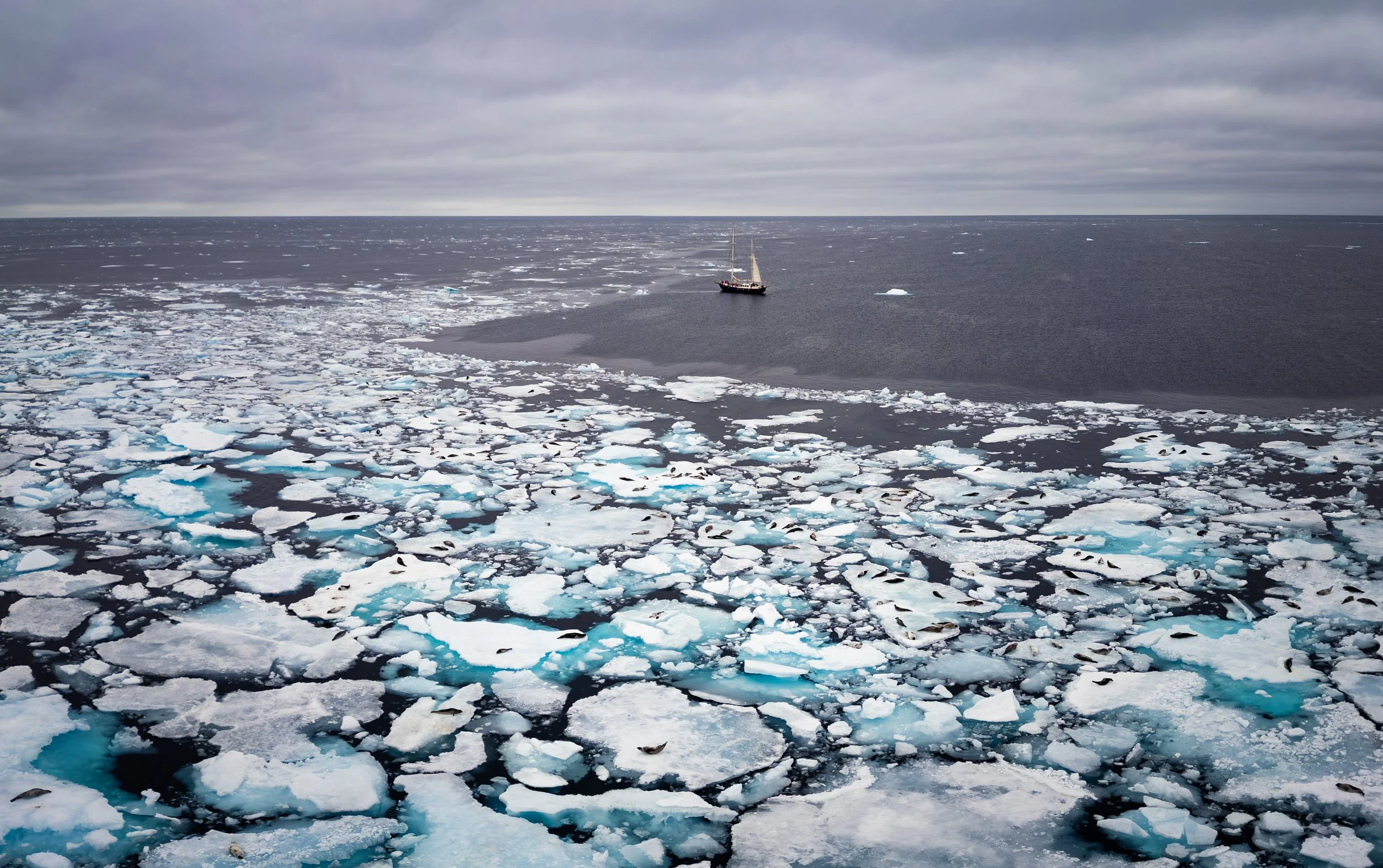
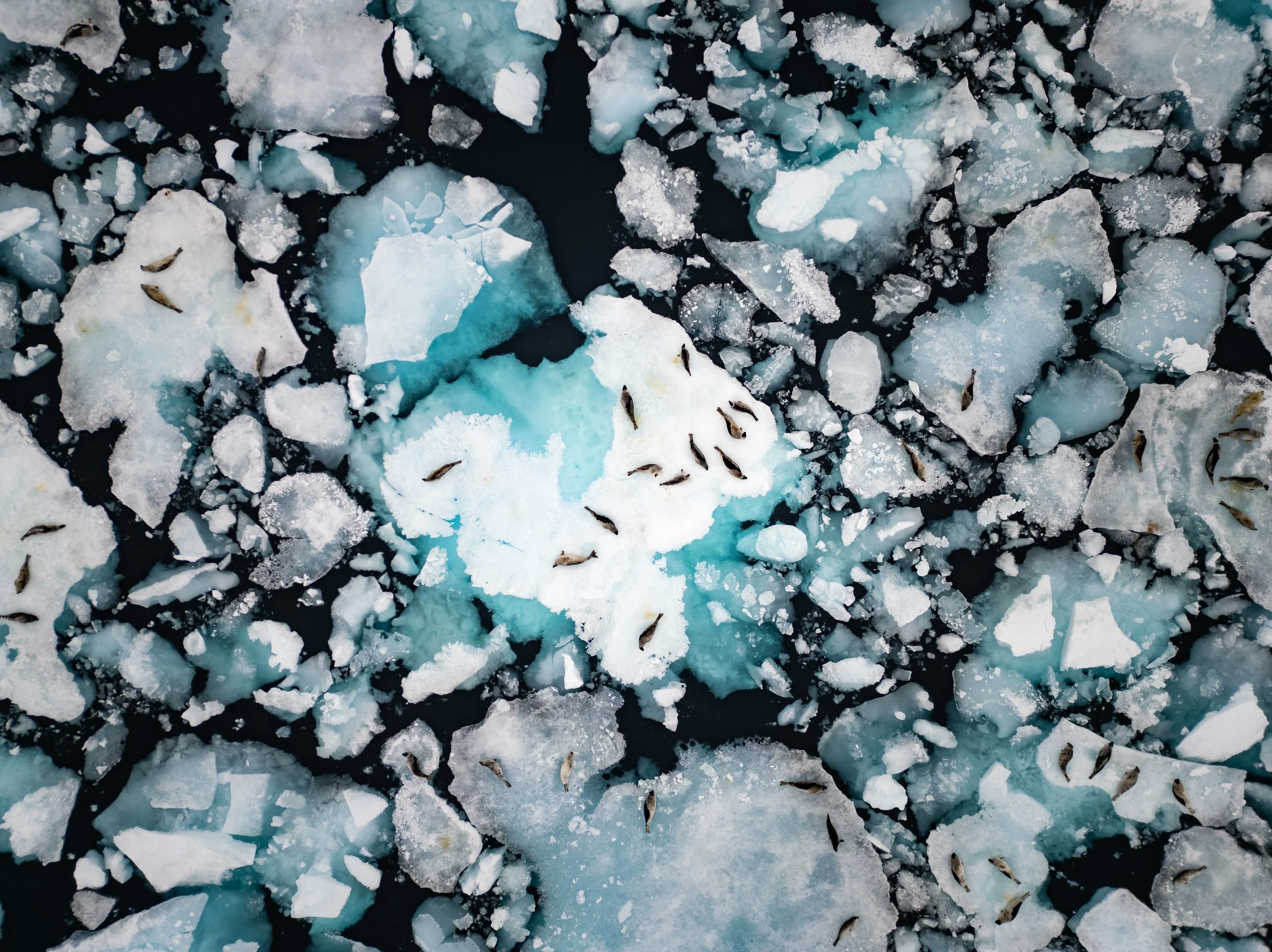
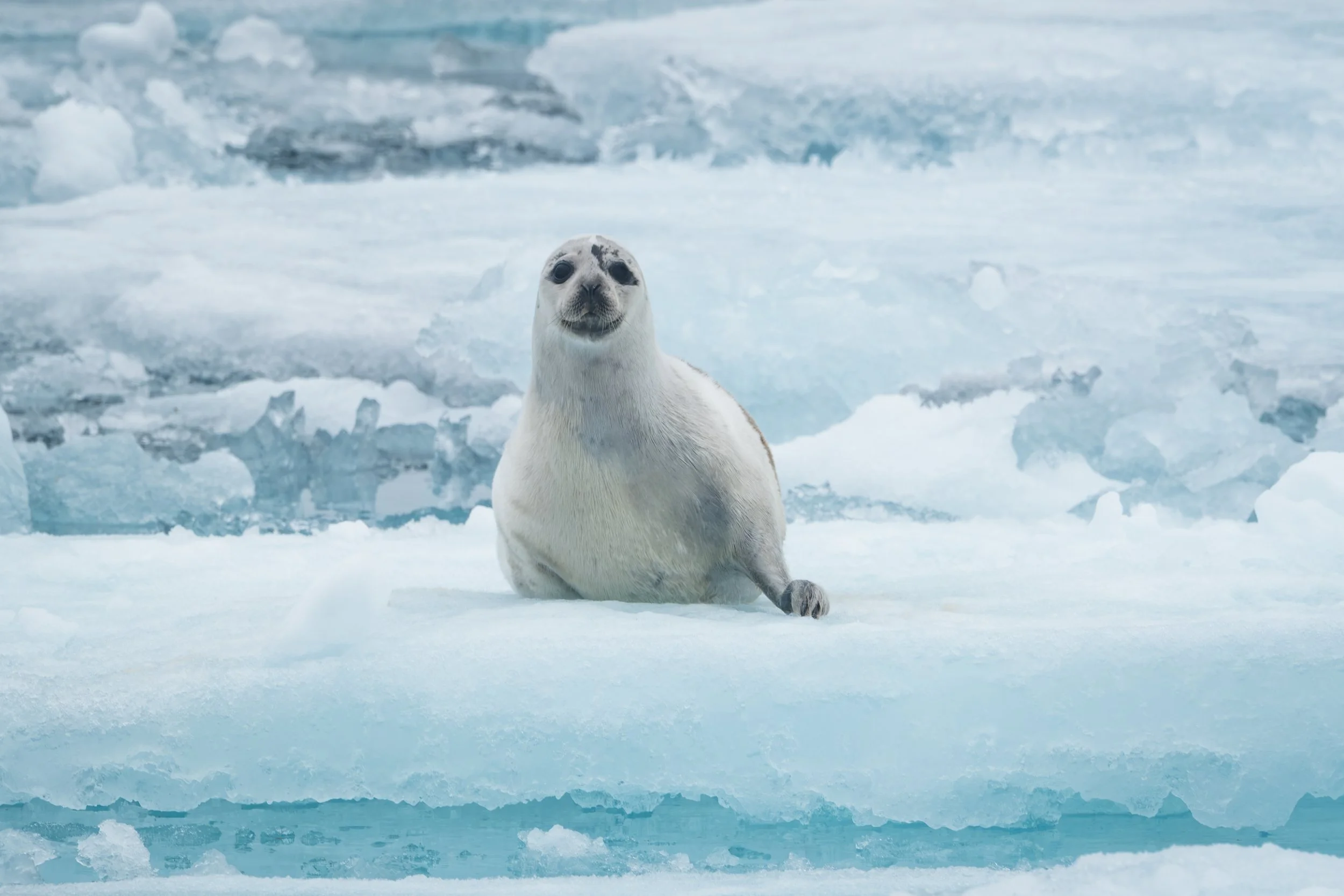
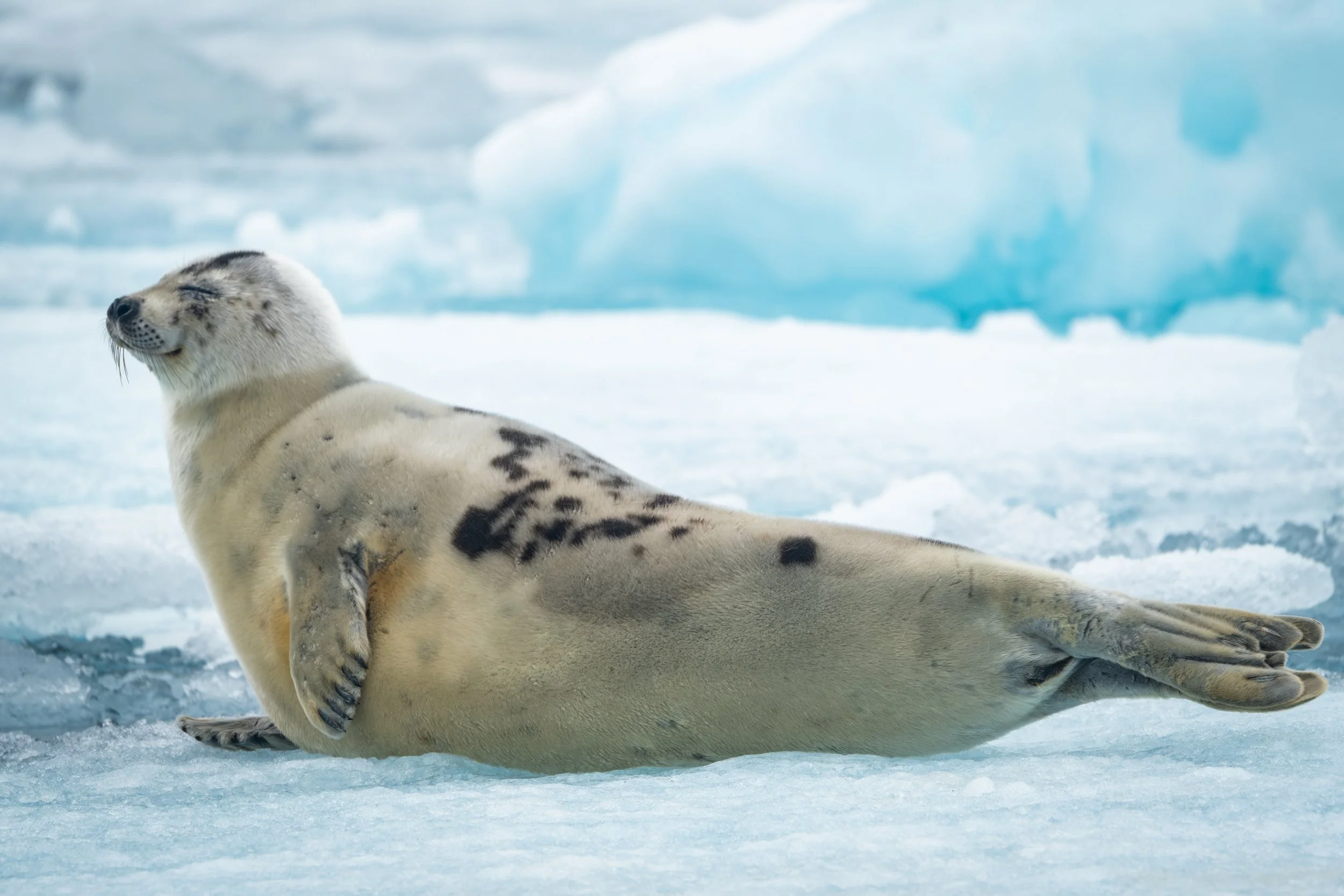
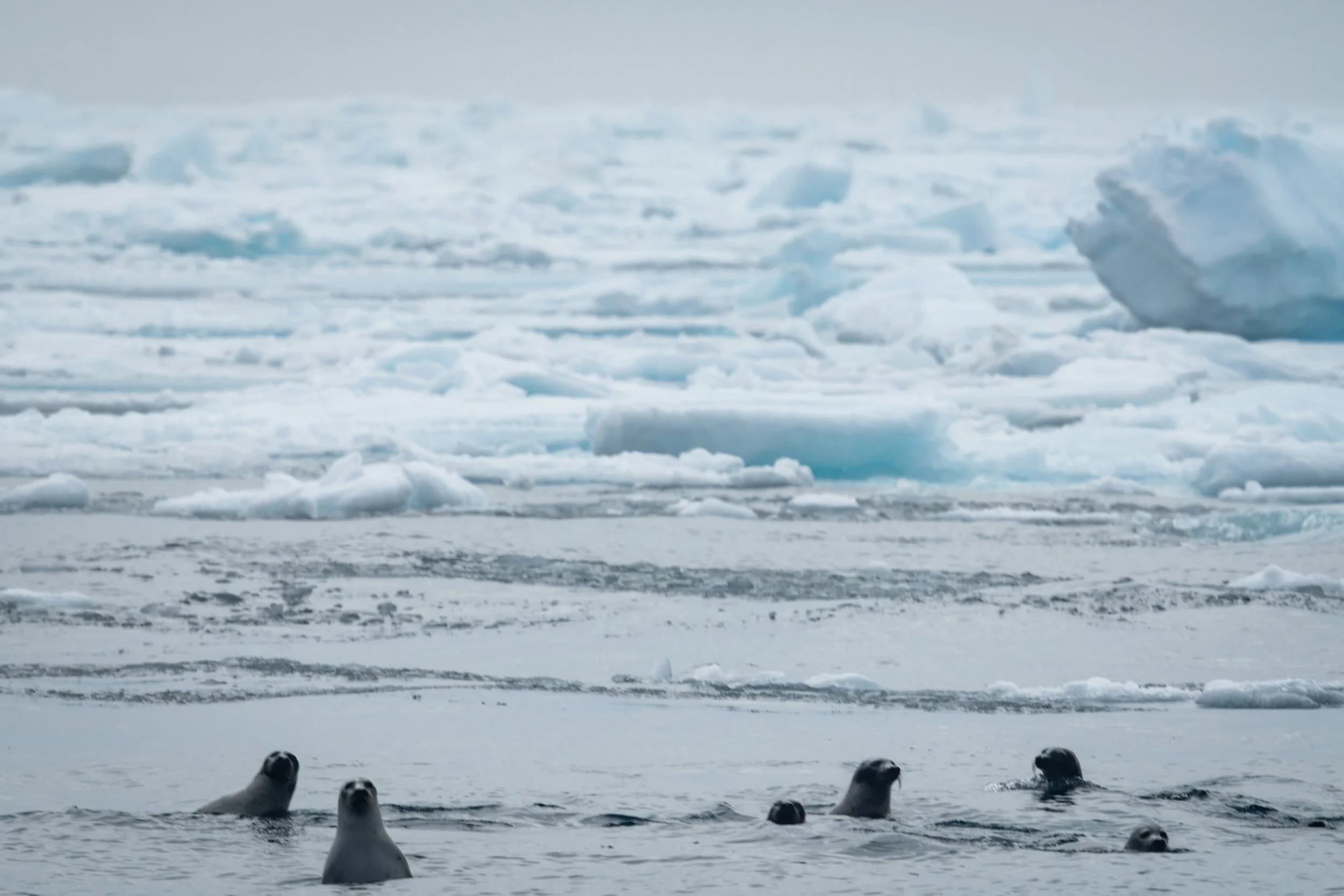
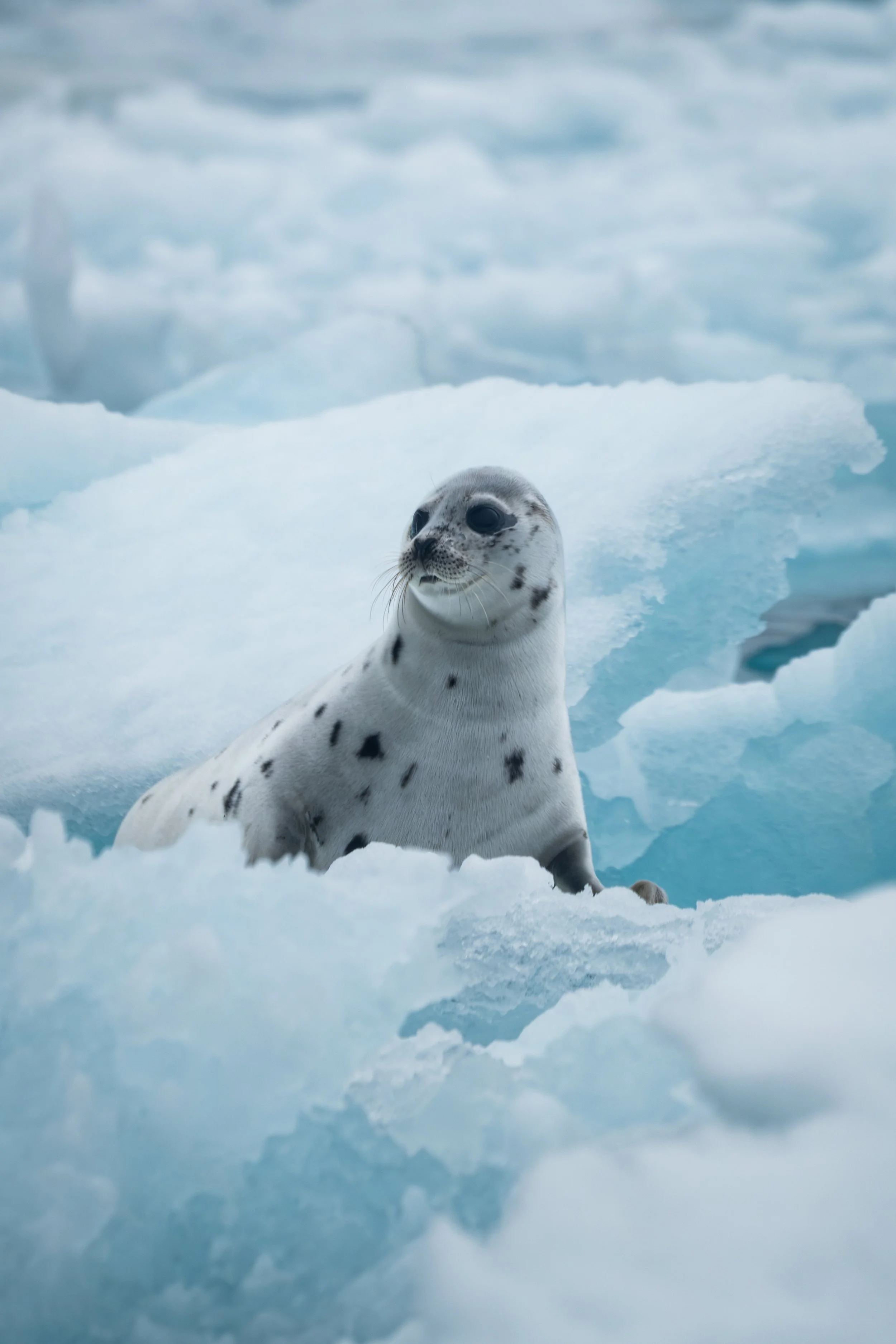
Encounters with wildlife are rare — but when they do happen, everyone rushes to the deck, and the excitement is unmistakable, making all the tough moments worthwhile. Moments like these remind us that we are on a truly extraordinary expedition. We see harp seals several times — once an enormous colony resting on the sea ice. Seen from above with the drone, it almost looks like an abstract piece of art.
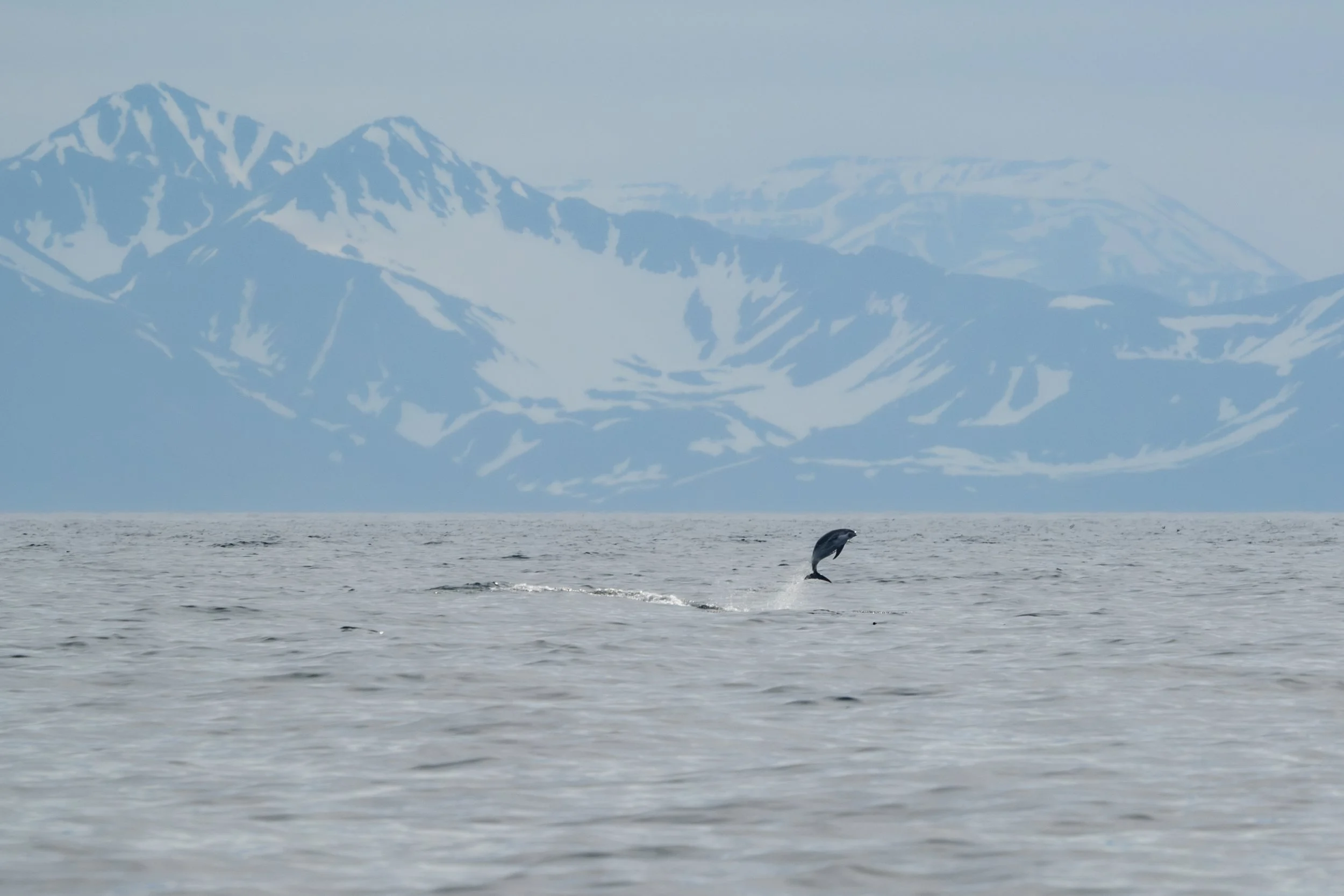
After nine days at sea, land finally comes into view — we can make out the mountains of northern Iceland on the horizon. We are greeted by dolphins swimming in front of the bow and leaping high out of the water, with snow-covered peaks in the distance as a backdrop.
We dock at Grimsey, a small island with around 103 inhabitants, located 40 km north of Iceland, lying directly on the Arctic Circle. It feels both wonderful and strange to have solid ground under my feet again. My body has grown used to everything being in constant motion. Even with perfectly stable ground, it now feels as if everything is swaying — a surreal sensation.
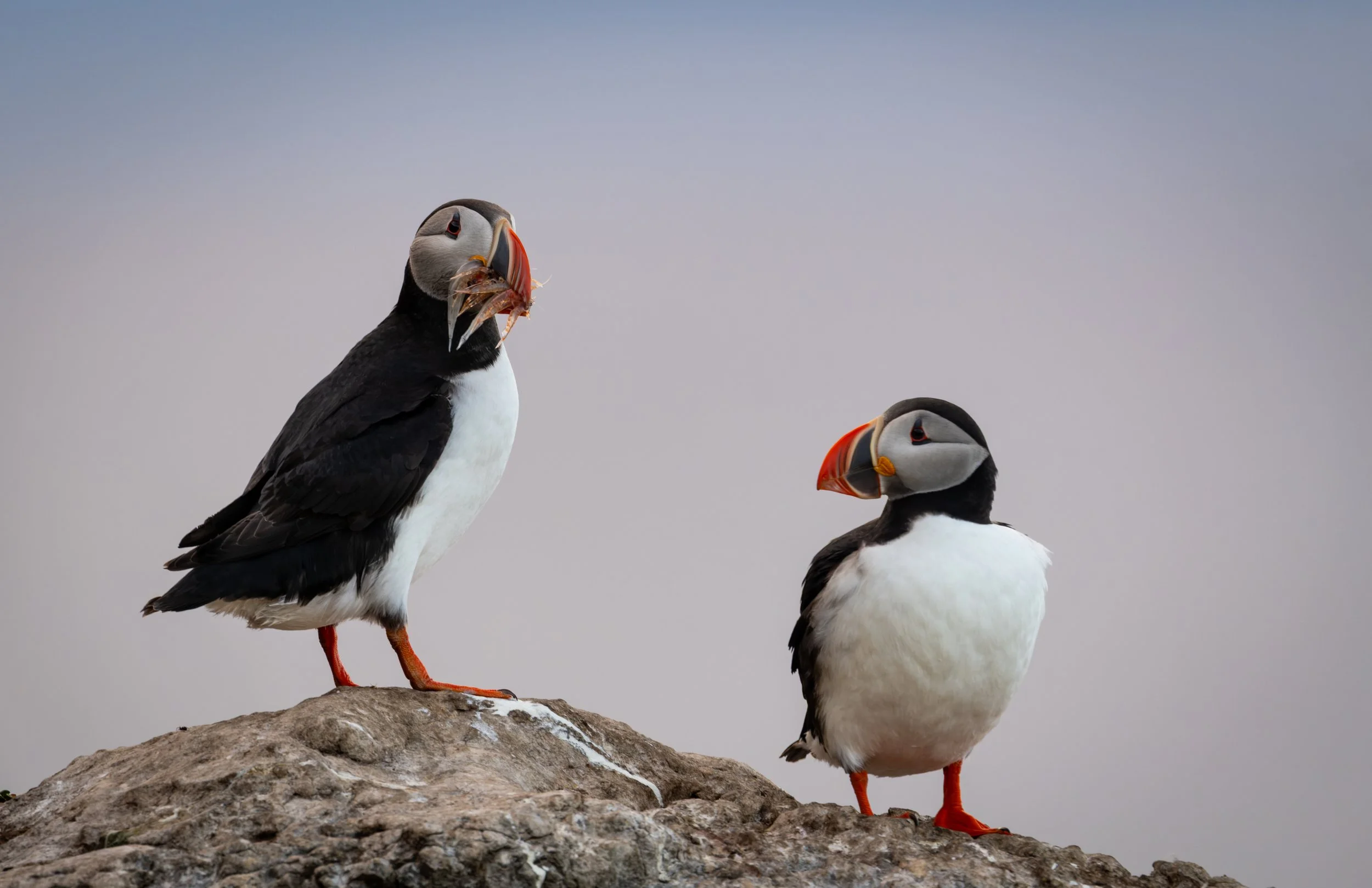
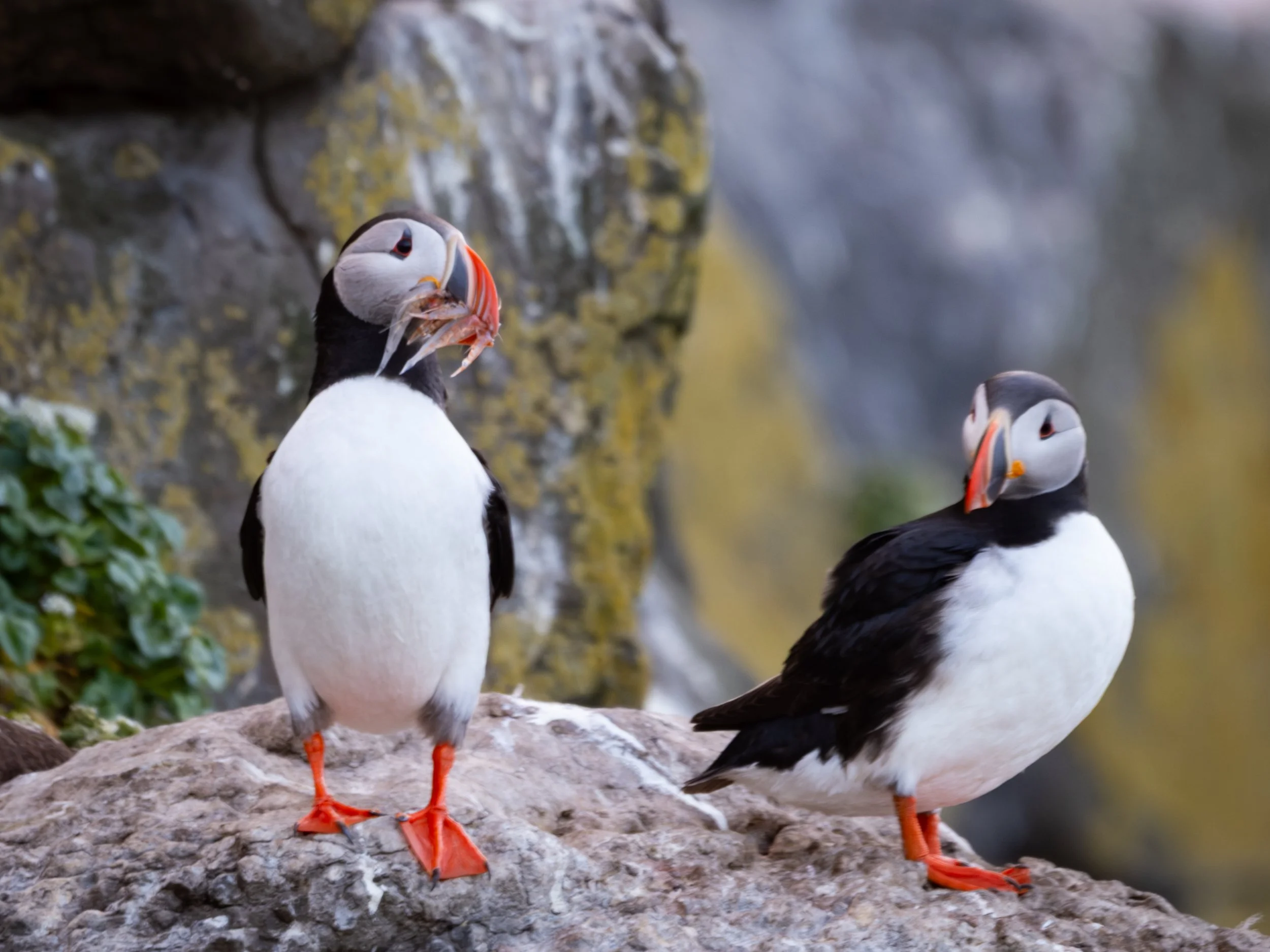
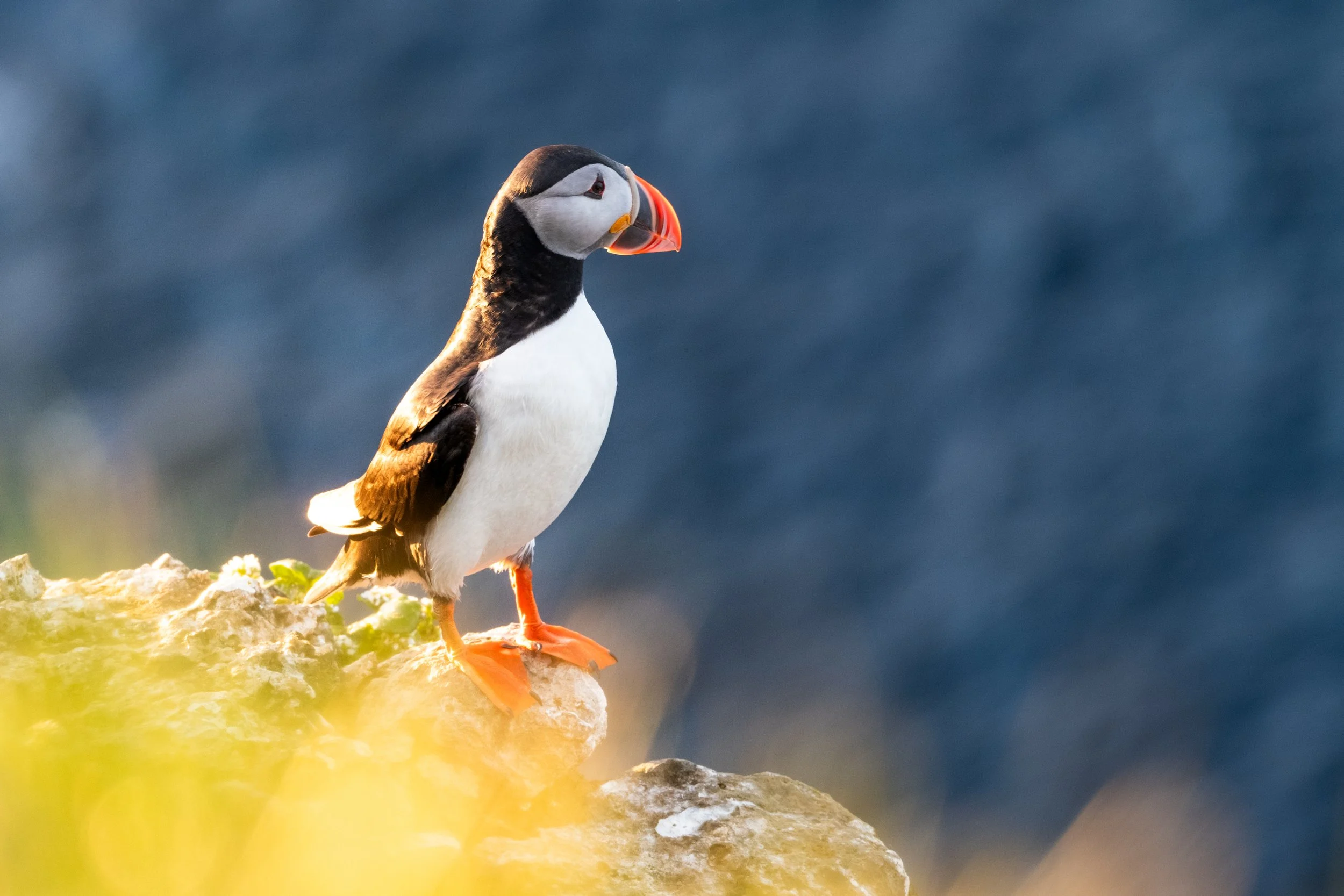
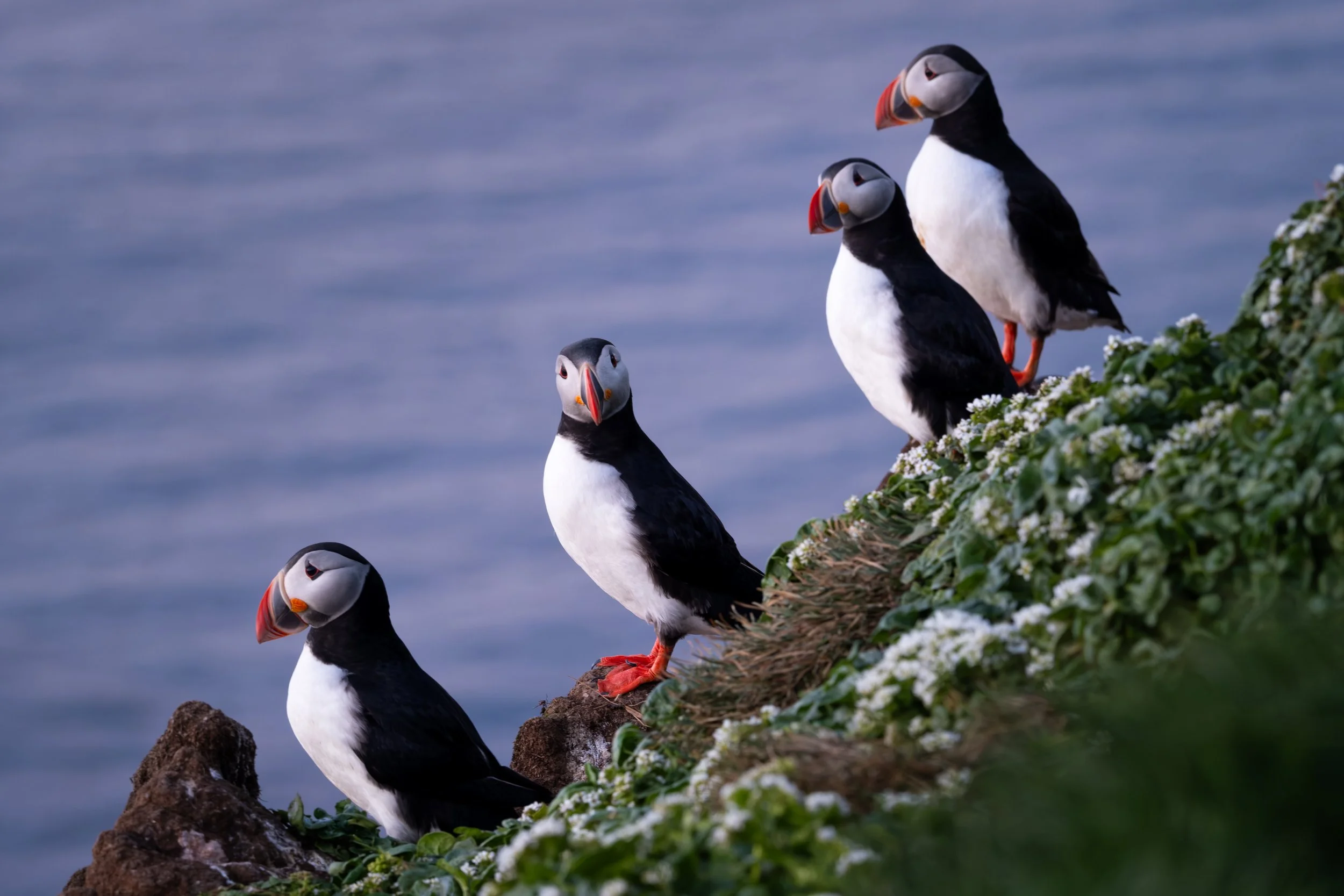
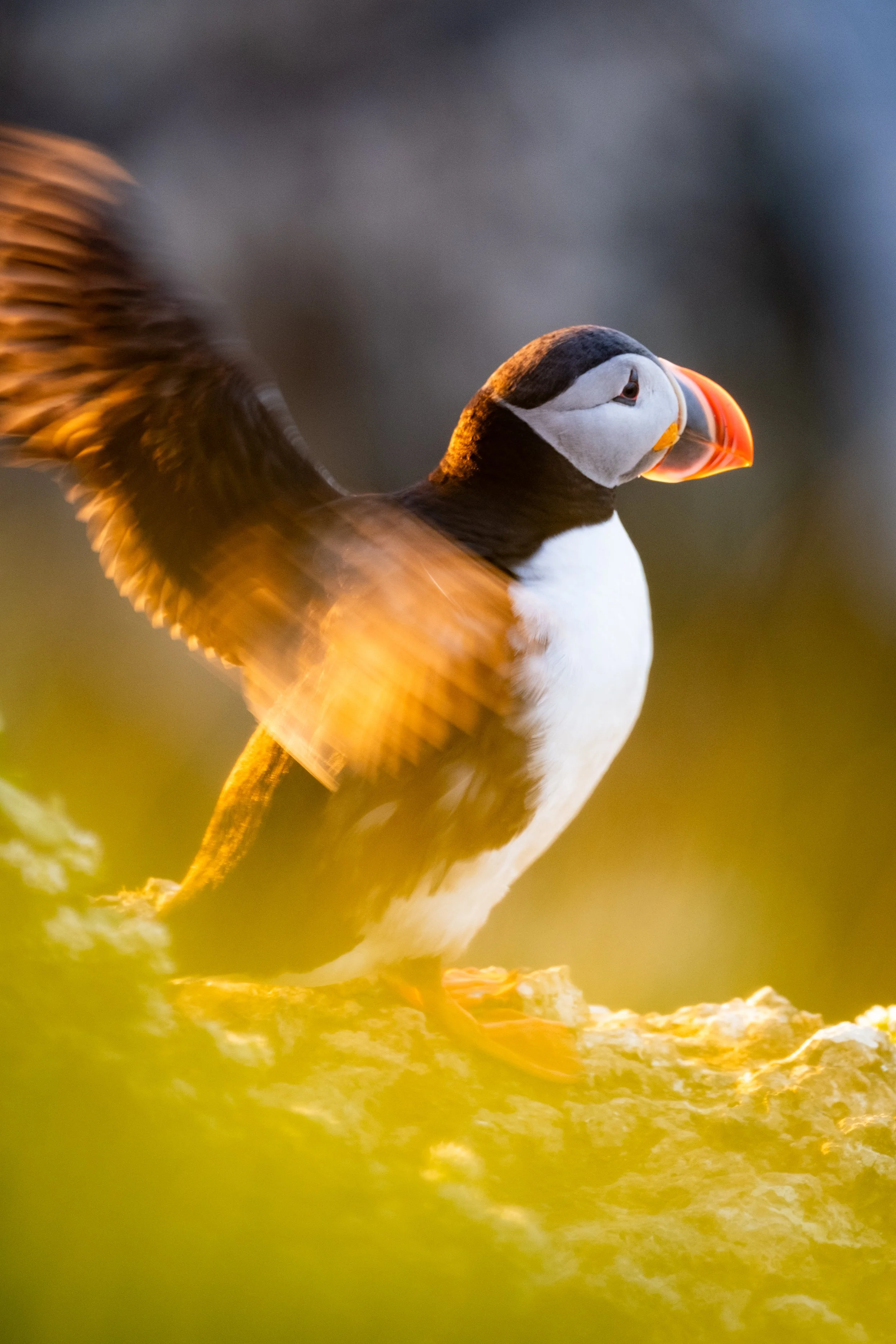
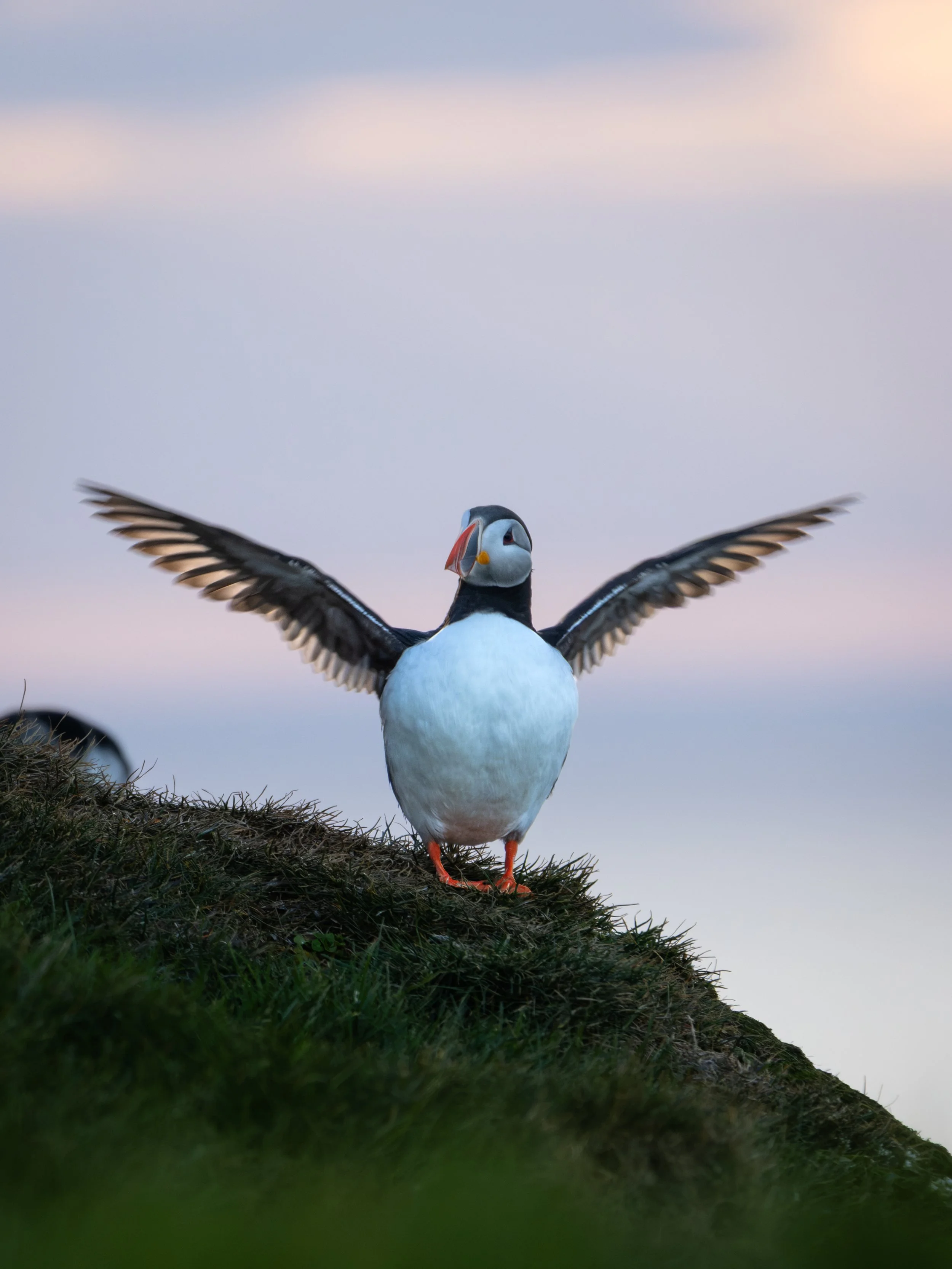
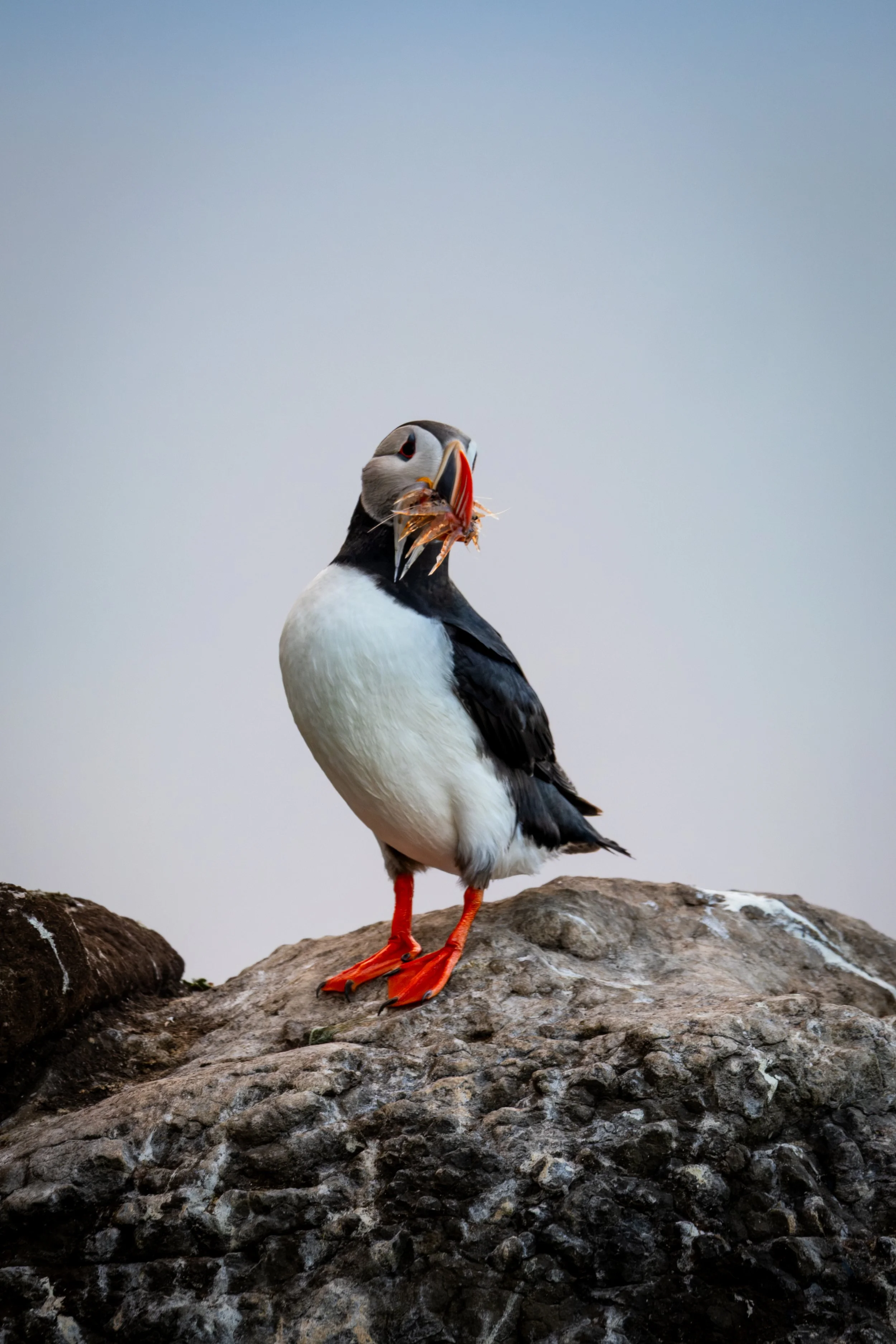
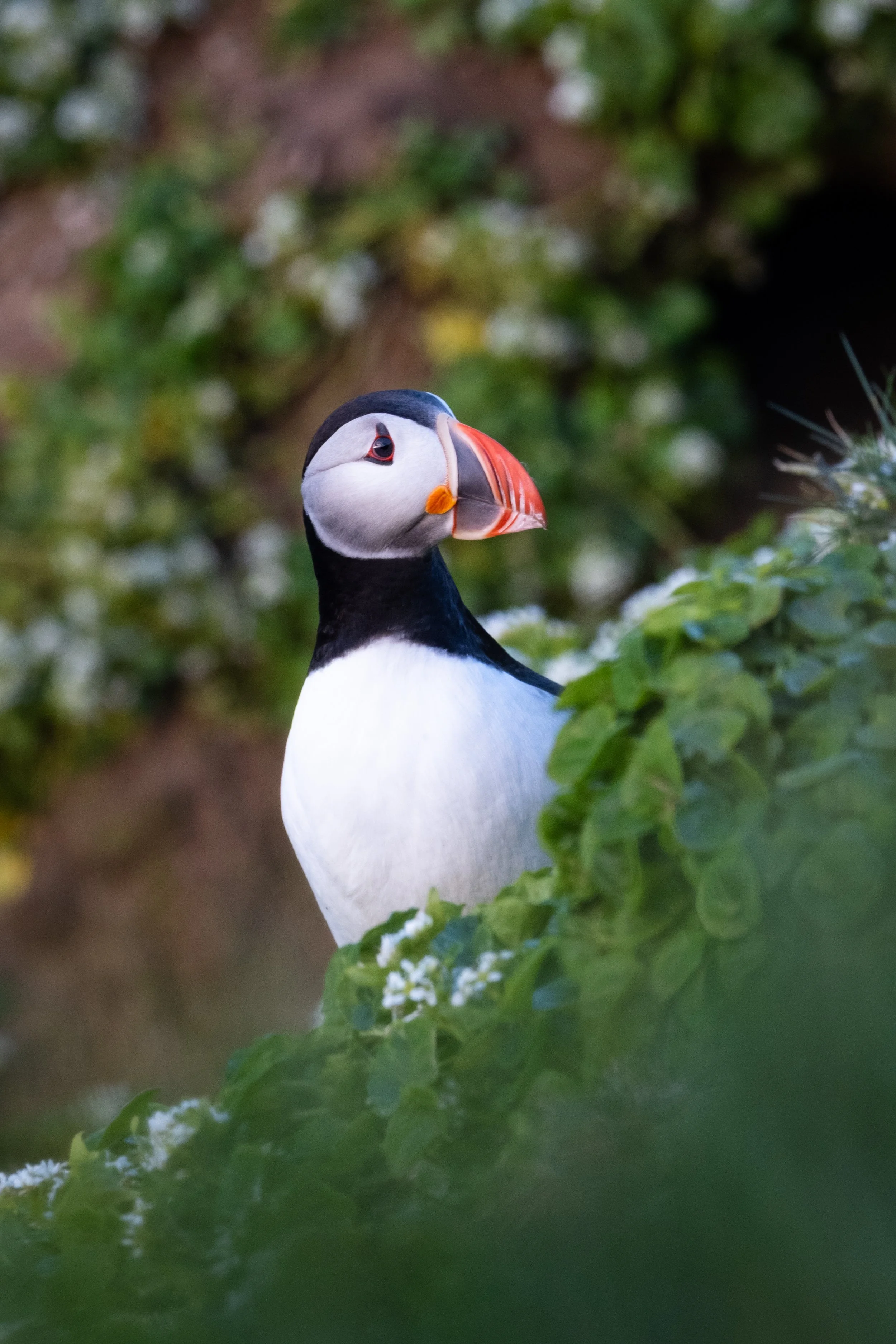
Grimsey is known as a popular breeding ground for seabirds, so after dinner onboard Tilvera, we head up to the highest cliffs on the eastern side of the island — in search of portraits of puffins.
First, though, we have to cross the grassy meadows that are home to the many Arctic terns on the island. They are not pleased with visitors. Even though we walk carefully along the path, they circle above us, screeching, and dive toward us. We hurry through their territory but still manage to capture a few photos of them in flight, lit by warm evening sunlight. We also meet the sweetest sheep — and of course, I have to take a picture of them too.
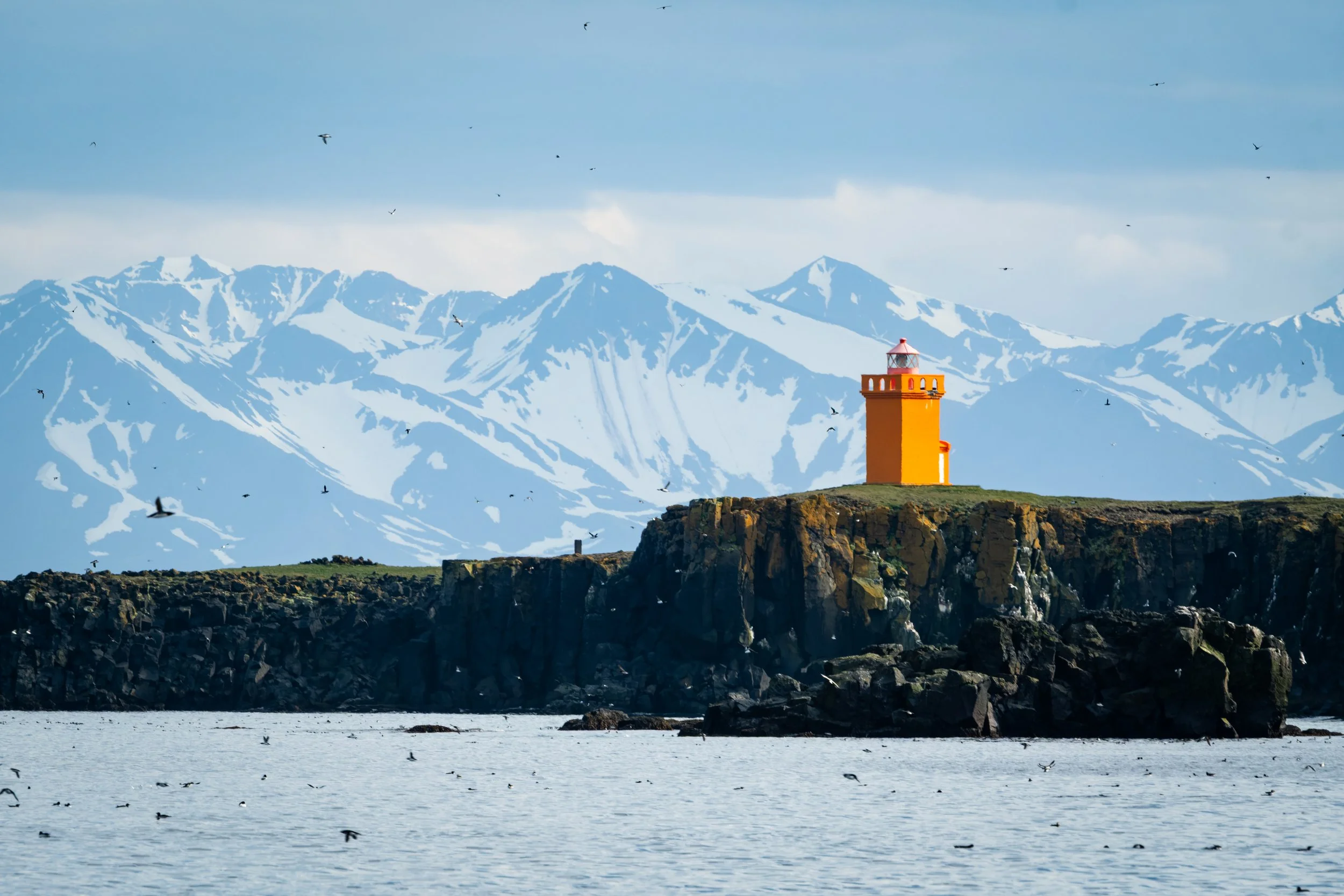
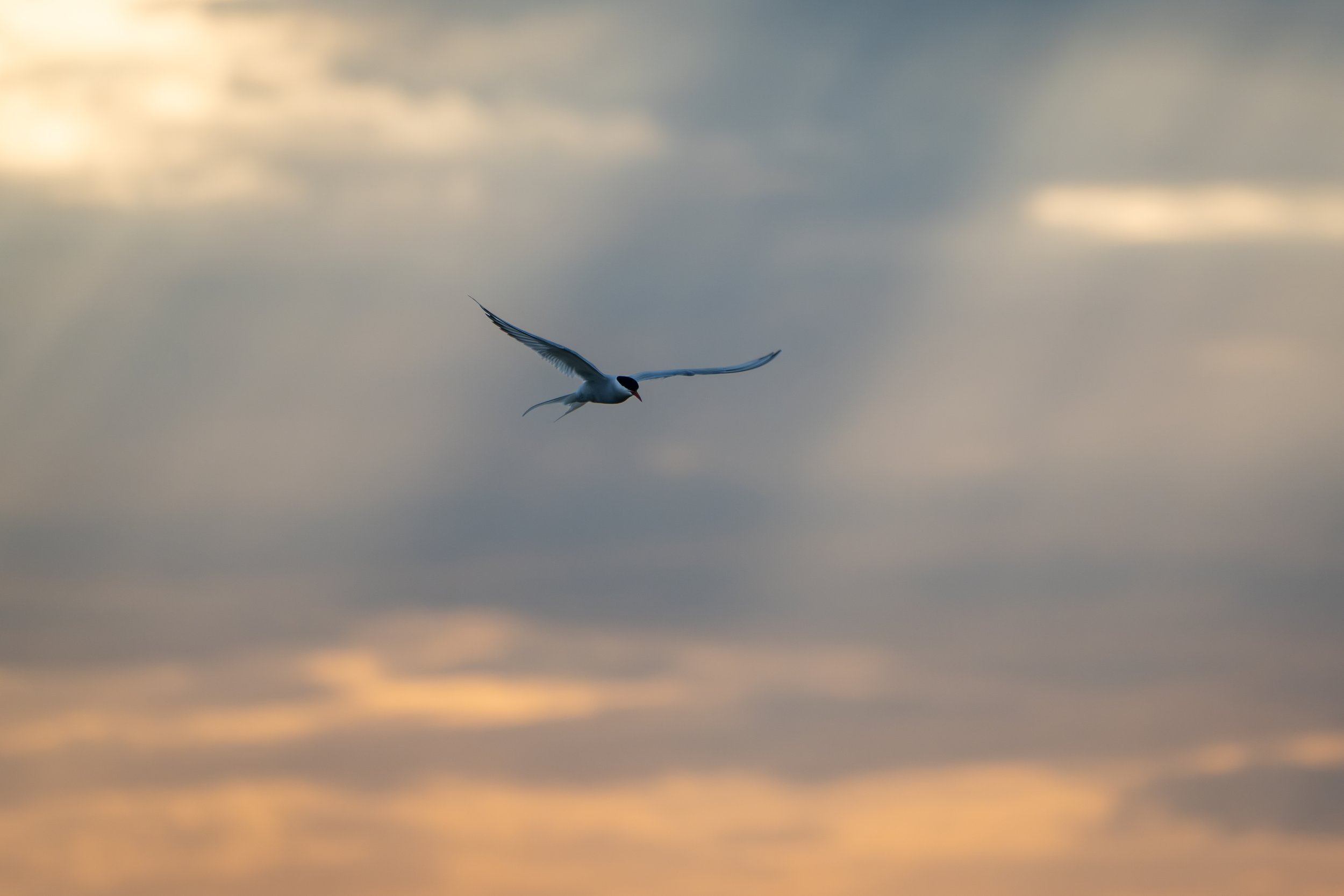
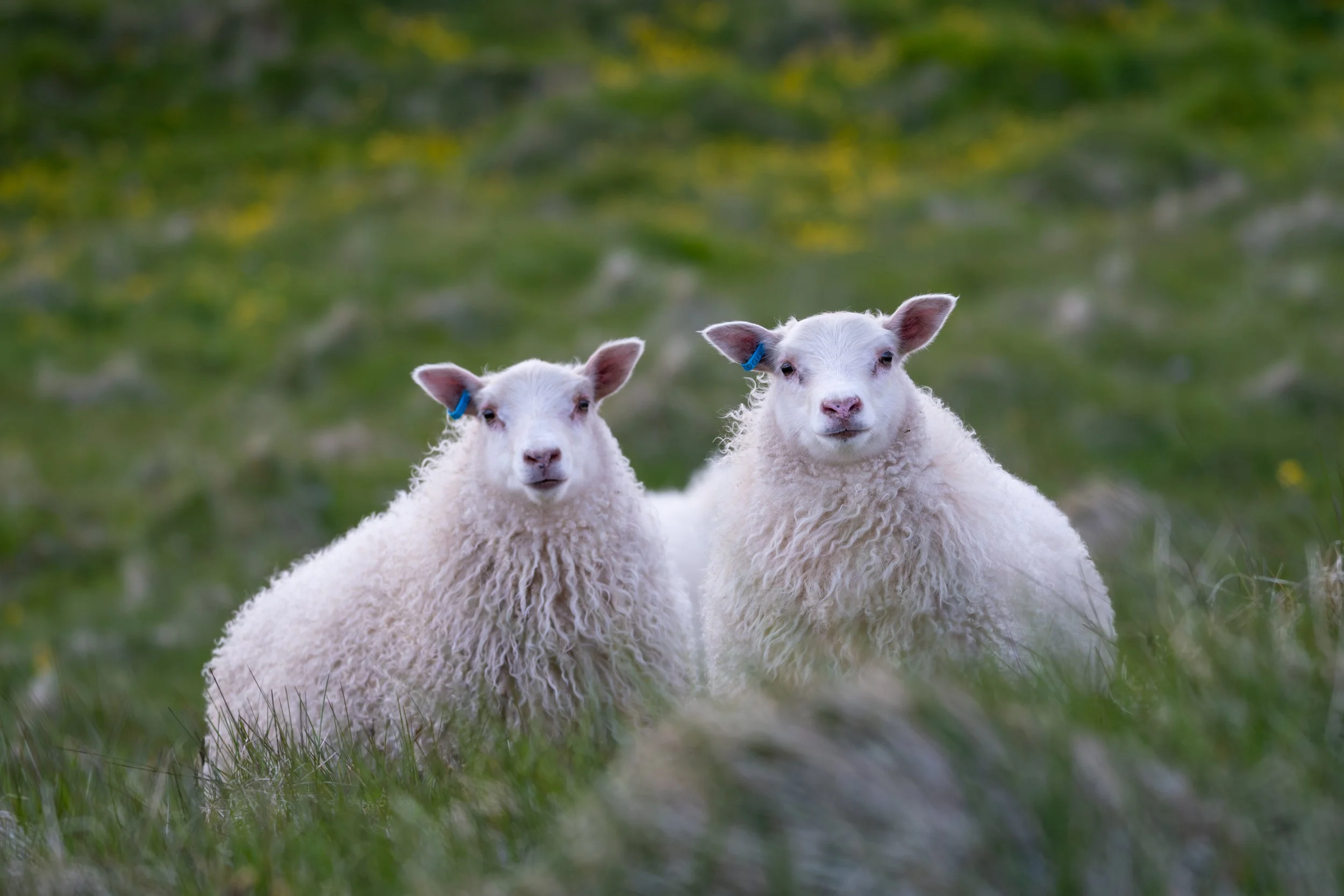
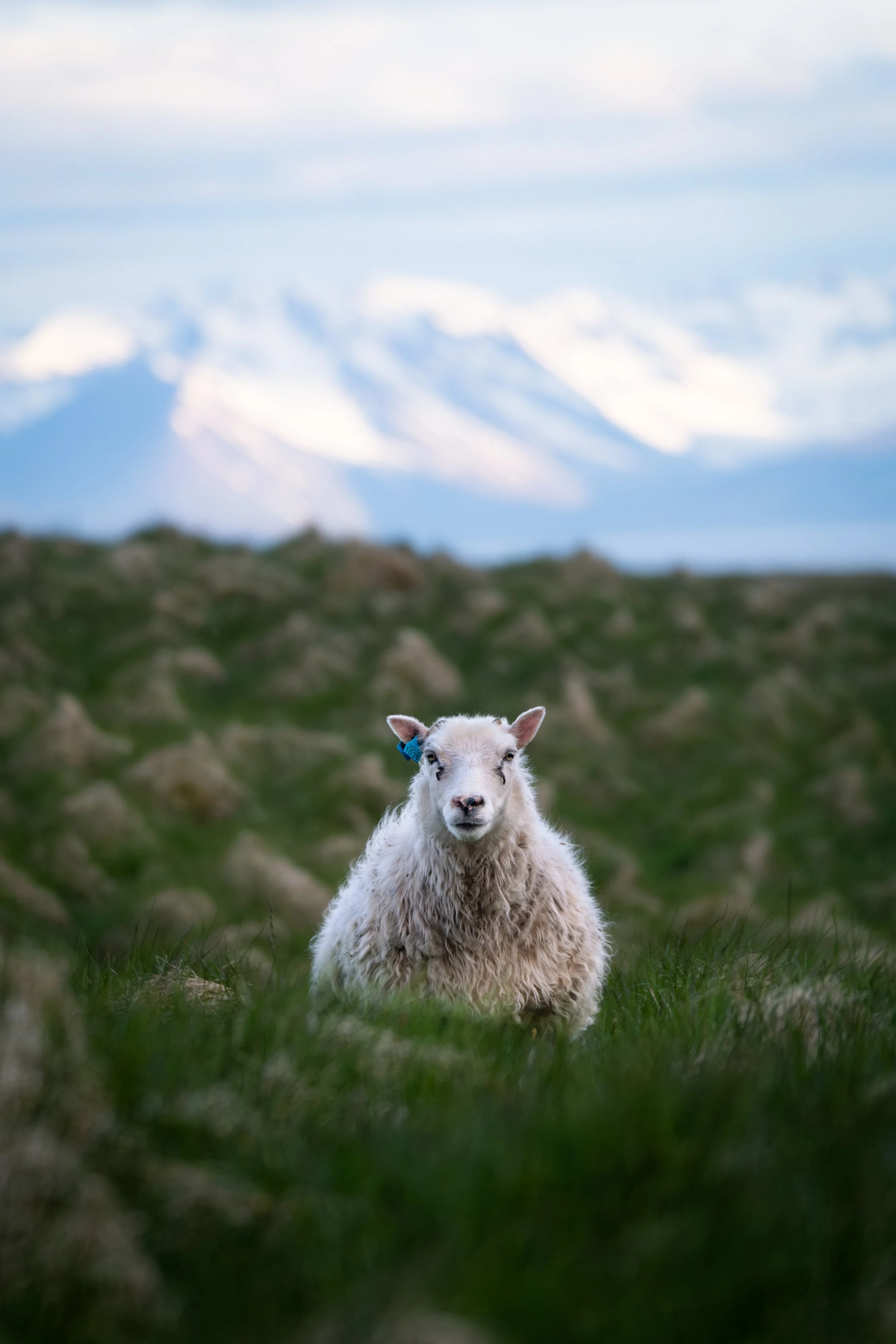
We walk along the cliff edge on the eastern side of Grimsey, stopping every thirty meters. Down into the deep grass, lying flat to get eye‑level with the puffins. Up again, then a little further to the next spot. After 4–5 hours of photographing, walking back and forth, and climbing up and down through deep grass with hidden holes, my knees are thoroughly tired (probably also because I’ve been so inactive onboard the boat for nine days), and the SD card is filled with puffin portraits.
At last, I’ve managed to capture some good images of these sweet birds, and I’m both happy and exhausted when I lay my head on the pillow back on the boat at 1 a.m.
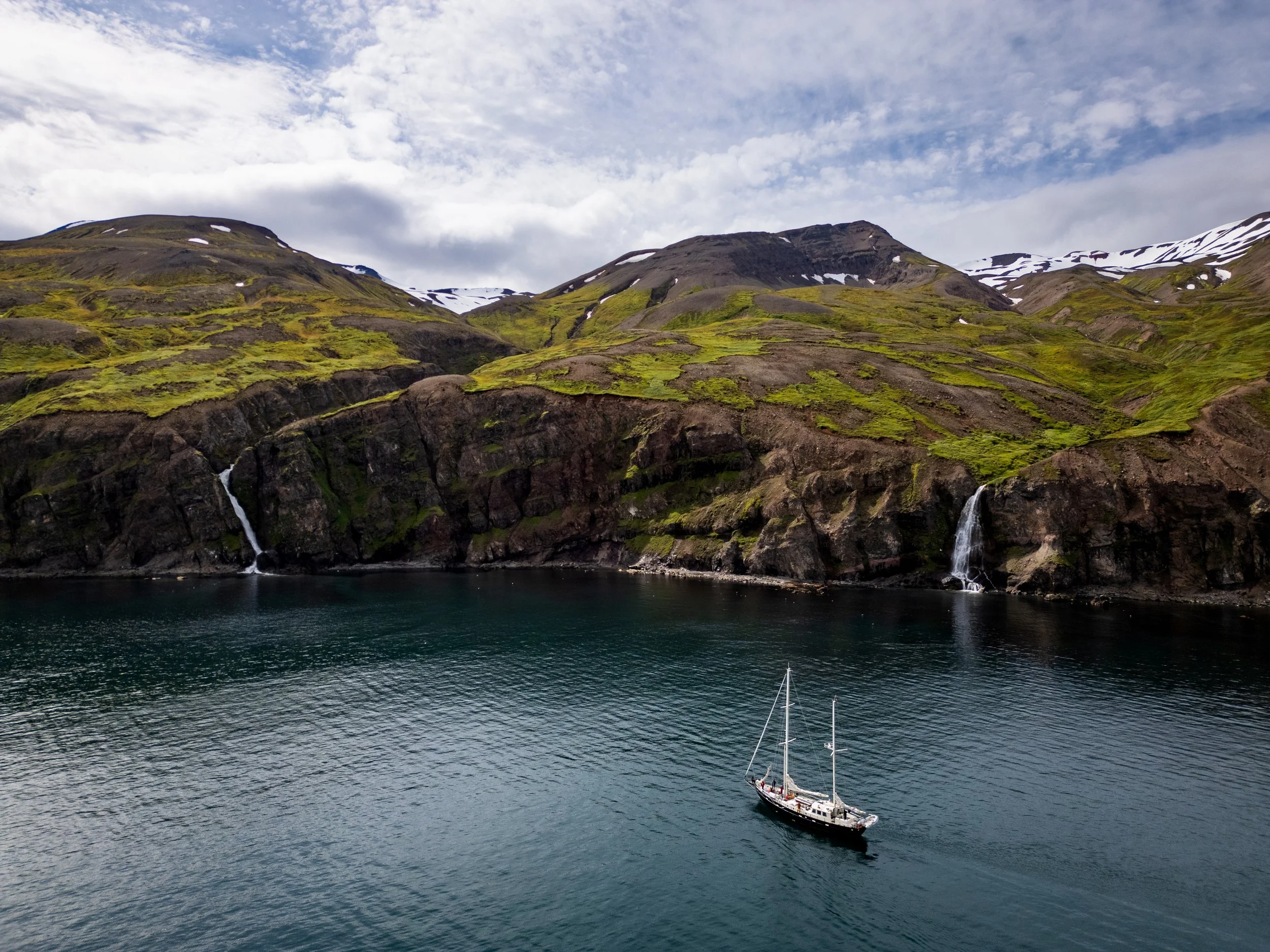
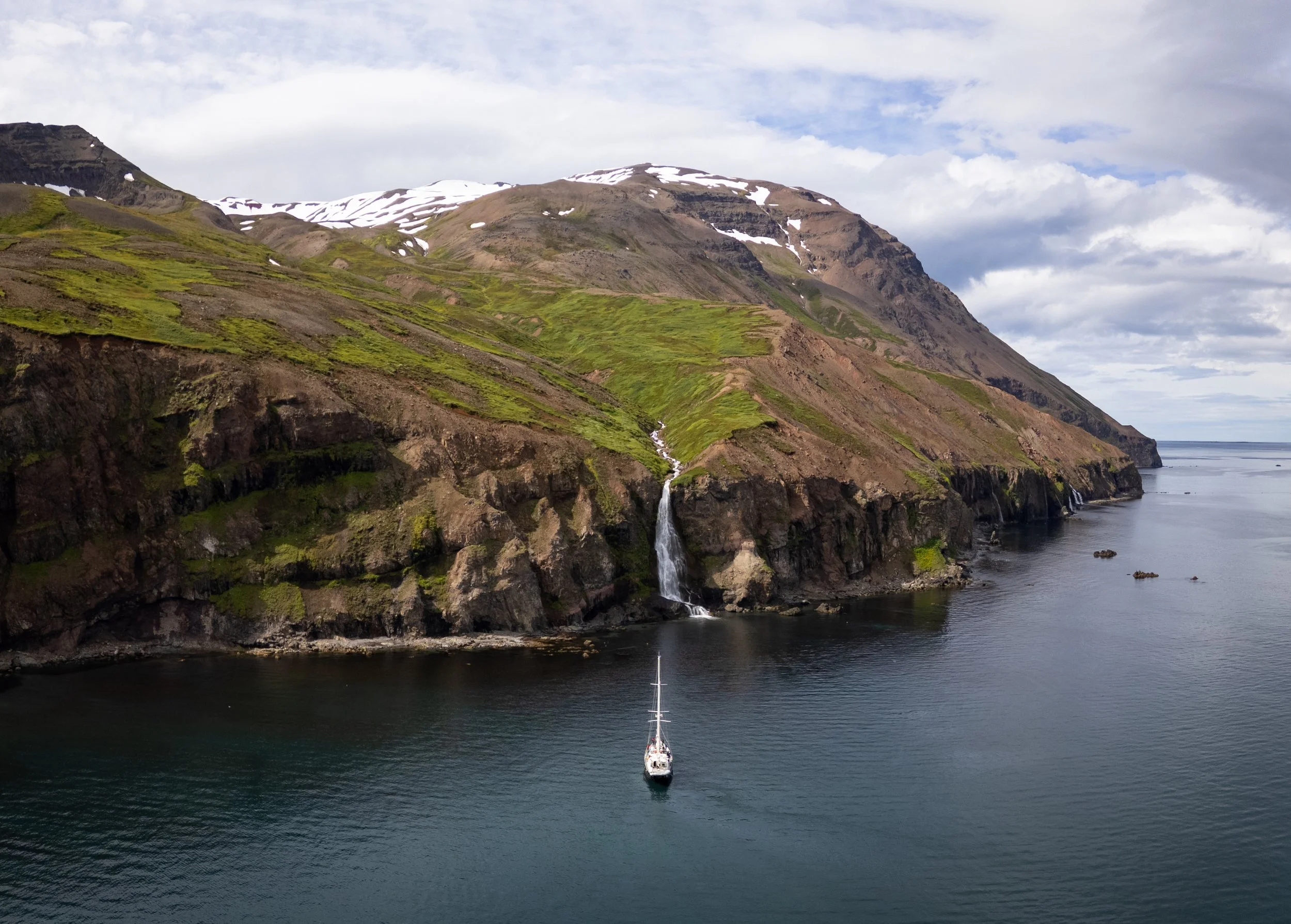
The next day is our final day at sea, and our course is set for Húsavík. We sail into Skjálfandi Bay along the eastern side, where the mountains rise steeply straight out of the ocean in brown and green tones, their peaks still covered in snow. In several places, waterfalls tumble directly over the cliff edge and into the sea.
The weather is calm and the sun is shining, so when we stop close to shore, I launch the drone to capture a photo of Tilvera with the mountains and waterfalls in the background. I manage to get some good shots, but within minutes the wind picks up and the drone starts giving wind warnings. I hurry to bring it back toward the boat — adrenaline pumping — as both drone and boat are pushed around by the gusts. I manage to back the drone in toward the side of the boat and catch it safely. Phew — the wildest landing of the trip!
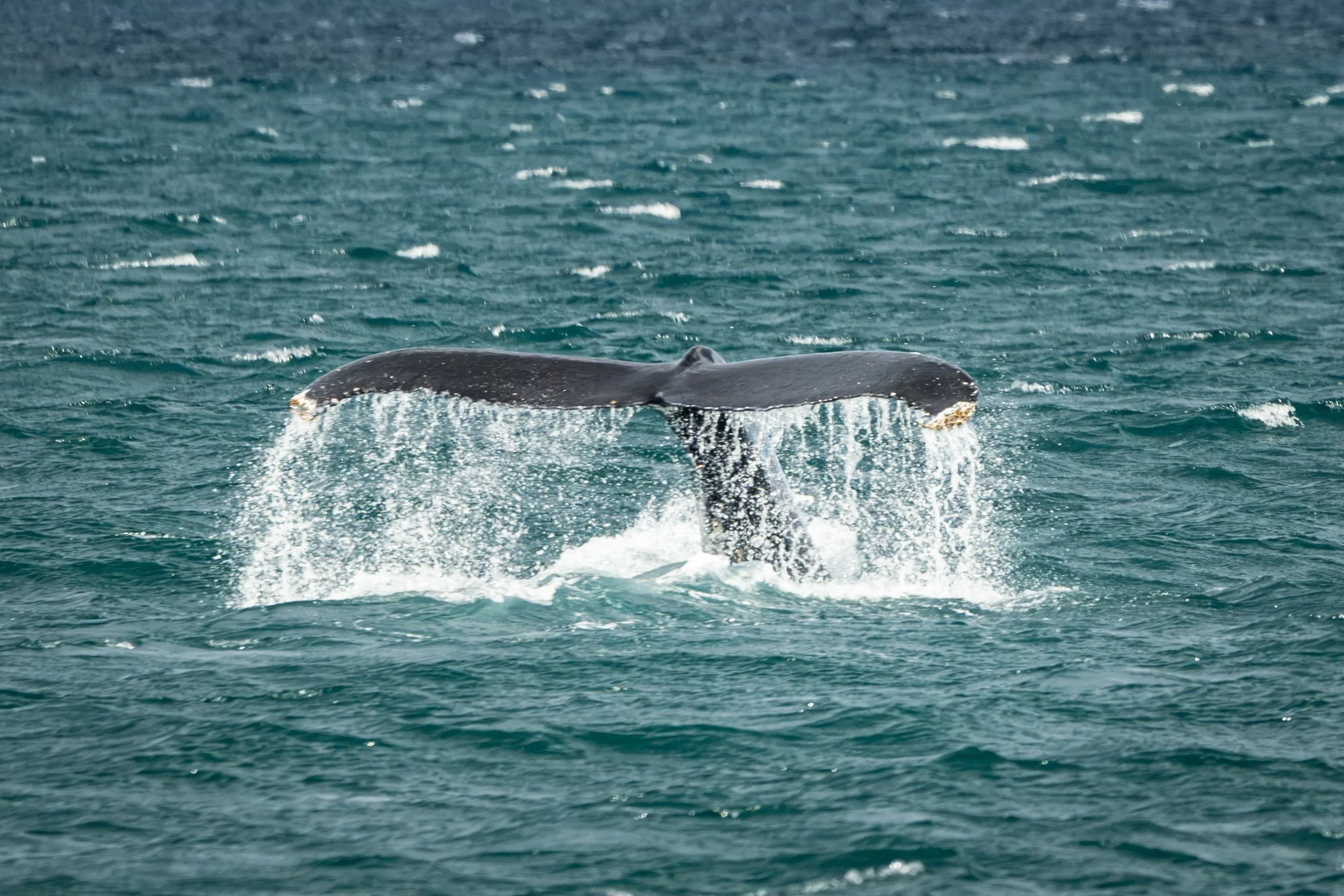
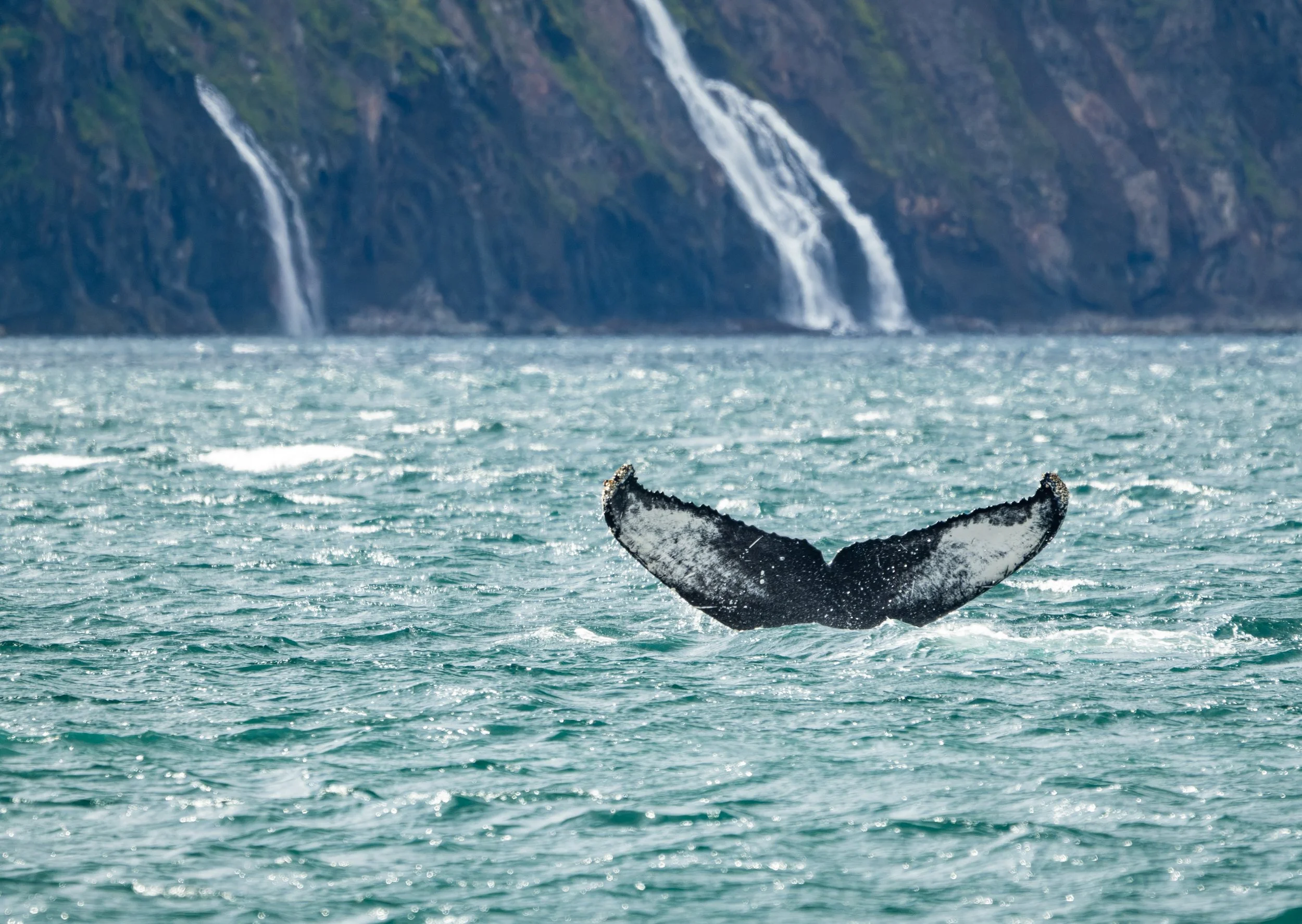
Once the wind has picked up, the humpback whales appear. We all stand lookout around the boat, calling out whenever someone spots a humpback. We are spoiled. For a long time, the humpback whales surfaces at regular intervals — first a dark back, followed by the easily recognizable black tail fluke with a white underside.
On our final evening aboard Tilvera, we celebrate with a long-table dinner on deck in the evening sun, with Húsavík’s church and a mountainside covered in purple lupines as our backdrop. Afterwards, we tour the North Sailing and Ocean Missions spaces down by the harbor, and at 10 p.m. a small group of us walk up to GeoSea.
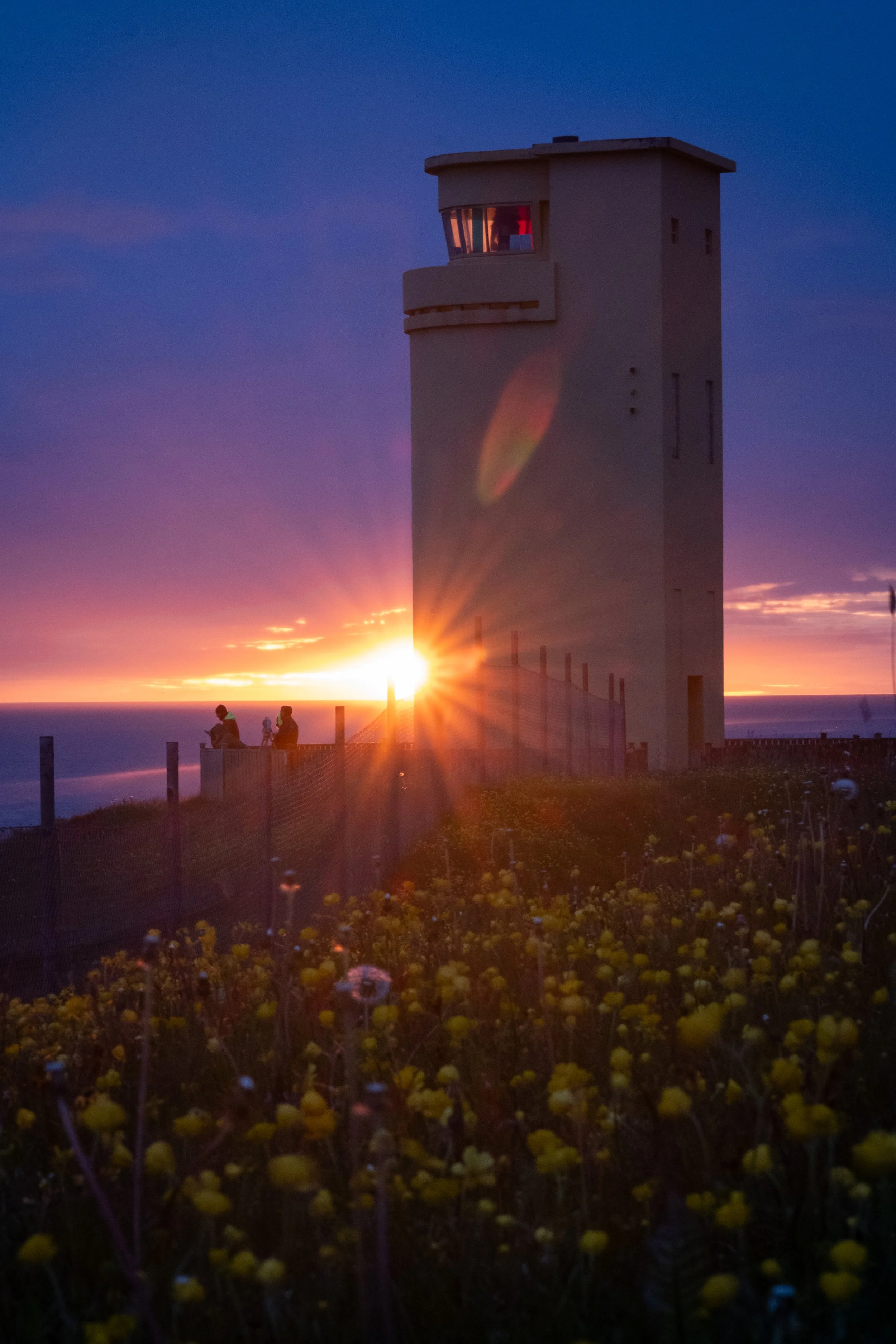
GeoSea sits beside Húsavík’s lighthouse, high above the town with a sweeping view over the fjord. We float in the warm water for a long time, soaking in the scenery. Every now and then, we spot the back of a whale out in the fjord — magical. When we finally leave GeoSea at midnight, as the last guests, the midnight sun has dipped below the clouds and now hangs as a large red orb just above the horizon. The perfect farewell to Húsavík and to thirteen days of adventurous sailing aboard Tilvera.